


Page 45 - MSAM-1-1
P. 45
Materials Science in Additive Manufacturing                    Crack-free AA7075 with Zr modification via LPBF


                         A                       B                       C


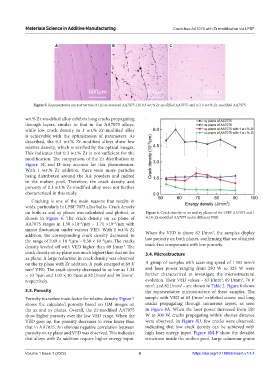
               Figure 5. Representative microstructure of (A) as-received AA7075, (B) 0.3 w.t.% Zr-modified AA7075, and (C) 1 w.t.% Zr-modified AA7075.


            w.t.% Zr-modified alloy exhibits long cracks propagating
            through layers, similar to that in the AA7075 alloys,
            while low crack density in 1 w.t.% Zr-modified alloy
            is  achievable  with  the  optimization  of  parameters.  As
            described,  the  0.3  w.t.%  Zr-modified  alloys  show  low
            relative density, which is verified by the optical images.
            This indicates that 0.3 w.t.% Zr is not sufficient for the
            modification. The comparison of the Zr distribution in
            Figure  1C  and  D may account for this phenomenon.
            With 1 w.t.% Zr addition, there were more particles
            being distributed around the AA powders and melted
            in the molten pool. Therefore, the crack density and
            porosity of 0.3 w.t.% Zr-modified alloy were not further
            characterized in this study.

              Cracking  is  one  of  the  main  reasons  that  results  in
            voids, particularly in LPBF 7075 alloy bulks. Crack density
            on both xz and xy planes was calculated and plotted, as   Figure 6. Crack density on xz and xy planes of the LPBF AA7075 and 1
            shown in  Figure  6. The crack density on xz plane of   w.t.% Zr-modified AA7075 under different VED.
            AA7075 ranges in 1.50 ×10 /μm – 1.71 ×10 /μm with
                                                 −3
                                   −3
            minor  fluctuation  under  various  VED.  With 1  w.t.%  Zr                    3
            addition, the corresponding crack density decreased to   When the VED is above 82  J/mm , the samples display
                                            −4
                              −4
            the range of 3.69 × 10 /μm – 9.38 × 10 /μm. The cracks   low porosity on both planes, confirming that we obtained
            density leveled off with VED higher than 69 J/mm . The   crack-free components with low porosity.
                                                      3
            crack density on xy plane was much higher than that on the   3.4. Microstructure
            xz plane. A large reduction in crack density was observed
            on the xy plane with Zr addition. A peak emerged at 69 J/  A group of samples with scanning speed of 1100  mm/s
            mm VED. The crack density decreased to as low as 1.34   and laser power ranging from 250 W to 325 W were
               3
                                                         3
               −3
                               −3
                                              3
            × 10 /μm and 1.03 × 10 /μm at 82 J/mm  and 90 J/mm ,   further characterized to investigate the microstructural
                                                                                                        3
                                                                                               3
            respectively.                                      evolution. Their VED values – 63 J/mm , 69 J/mm , 76 J/
                                                               mm , and 82 J/mm – are shown in Table 2. Figure 8 shows
                                                                  3
                                                                              3
            3.3. Porosity                                      the representative microstructure of these samples. The
                                                                                       3
            Porosity is another main factor for relative density. Figure 7   sample with VED at 63 J/mm  exhibited coarse and long
            shows the calculated porosity based on OM images on   cracks propagating through numerous layers, as seen
            the xz and xy planes. Overall, the Zr-modified AA7075   in Figure 8A. When the laser power increased from 250
            show higher porosity over the low VED range. When the   W to 300 W, cracks propagating within shorter distance
            VED goes up, the porosity decreases to even lower than   were observed. In Figure 8D, few cracks were observed,
            that in AA7075. An obvious negative correlation between   indicating that low crack density can be achieved with
            porosity on xy plane and VED was observed. This indicates   high laser energy input.  Figure  8M-P show the detailed
            that alloys with Zr addition require higher energy input.   structures inside the molten pool. Large columnar grains
            Volume 1 Issue 1 (2022)                         6                      https://doi.org/10.18063/msam.v1i1.4

