


Page 19 - OR-1-1
P. 19
A                                                            B


               C                                                            D


                E


                F                                          G


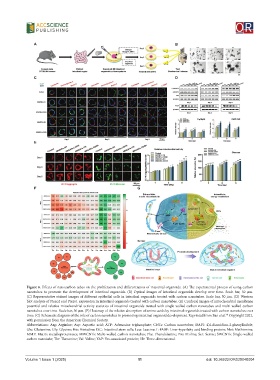
            Figure 6. Effects of nanocarbon tubes on the proliferation and differentiation of intestinal organoids. (A) The experimental process of using carbon
            nanotubes to promote the development of intestinal organoids. (B) Optical images of intestinal organoids develop over time. Scale bar, 50  μm.
            (C) Representative stained images of different epithelial cells in intestinal organoids treated with carbon nanotubes. Scale bar, 50 μm. (D) Western
            blot analysis of Piezo2 and Piezo1 expression in intestinal organoids treated with carbon nanotubes. (E) Confocal images of mitochondrial membrane
            potential and relative mitochondrial activity statistics of intestinal organoids treated with single-walled carbon nanotubes and multi-walled carbon
            nanotubes over time. Scale bar, 50 μm. (F) Heatmap of the relative absorption of amino acids by intestinal organoids treated with carbon nanotubes over
                                                                                                 70
            time. (G) Schematic diagram of the role of carbon nanotubes in promoting intestinal organoid development. Reprinted from Bao et al.  Copyright 2021,
            with permission from the American Chemical Society.
            Abbreviations: Arg: Arginine; Asp: Aspartic acid; ATP: Adenosine triphosphate; CNTs: Carbon nanotubes; DAPI: 4’,6-diamidino-2-phenylindole;
            Glu: Glutamine; Gly: Glycine; His: Histadine; ISC: Intestinal stem cells; Leu: Leucine; L-FABP: Liver-type fatty acid binding protein; Met: Methionine;
            MMP: Matrix metalloproteinases; MWCNTs: Multi-walled carbon nanotubes; Phe: Phenylalanine; Pro: Proline; Ser: Serine; SWCNTs: Single-walled
            carbon nanotube; Thr: Threonine; Val: Valine; YAP: Yes-associated protein; 3D: Three-dimensional.


            Volume 1 Issue 1 (2025)                         11                           doi: 10.36922/OR025040004

