


Page 134 - TD-3-4
P. 134
Tumor Discovery                                                     CTC characterization for EGFR mutations


            sequence artifacts attributed, at least in part, to the low quality   The results from mutational profiling of the CTCs are
            of DNA, the clonal amplification of DNA strands, and/  generally consistent with the exon 18 – 21 mutational profile
            or the need for a relatively high number of PCR cycles due   of patients with NSCLC using tumor biopsy. For example,
            to the low quantity of starting material, as well as chemical   86.7% of CTC-enriched samples analyzed in this study had
            modifications that occur during the NGS workflow.    a deletion in exon 19 (E746_A750delELREA), which is
                                                         54
            However, in this study, CTCs were analyzed for mutations   consistent with published  literature reporting that  around
            at a read depth of ×10,000, which has been recommended as   80% – 90% of NSCLC patients with an EGFR mutation have
            best practice in the literature. 55,56  Therefore, we believe this   either this deletion or an exon 21 L858R mutation. 2,8,12,28
            reduces the probability of methodological errors. In contrast,   However, the frequency of mixed mutations was much
            some studies have suggested that because CTCs comprise a   higher in the current study (30%) than that in others, with
            very small percentage of the total tumor mass, any mutation   Caucasian patients having reported frequencies of 5% – 7%
            detected with sufficient coverage should be recognized as   for mixed mutations. 56-58  The difference in frequency rates
            a potentially important clinical variant.  The incidence   may be attributed to the relatively small sample size of the
                                             55
            of EGFR mutations using the CTC + NGS matrix will be   present study or, as described earlier, the disparity in analysis
            investigated in further studies using a microfluidic device   techniques. To the best of our knowledge, the only study that
            (designed by our group) capable of single-cell RNASeq.  has employed NGS for mutational analysis of EGFR mutations
                                                               in CTCs obtained from NSCLC reported an incidence of 13%
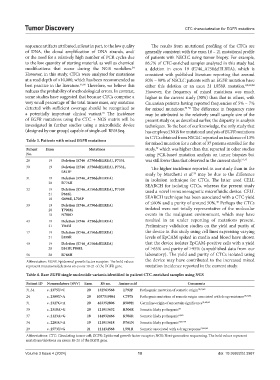
            Table 3. Patients with mixed EGFR mutations
                                                               for mixed mutation for a cohort of 37 patients enrolled for the
                                                                   59
            Patient   Exon             Mutations               study,  which was higher than that reported in other studies
            No.                                                using PCR-based mutation analysis on tumor biopsies but
            28        19   Deletion (E746_A750delELREA), P733L   was still lower than that observed in the current study. 51,52
            30        19   Deletion (E746_A750delELREA), P733L,   The higher incidence reported in our study than in the
                           L841P
                                                               study by Marchetti  et al.  may be due to the difference
                                                                                   59
            31        19   Deletion (E746_A750delELREA)        in isolation technique for CTCs. The latter used CELL
                      20   R776H                               SEARCH for isolating CTCs, whereas the present study
            32        19   Deletion (E746_A750delELREA), P753S  used a novel immunomagnetic microfluidic device. CELL
                      21   P848L
                      18   G696E, L703P                        SEARCH technique has been associated with a CTC yield
                                                                                             40
            39        19   Deletion (E746_A750delELREA)        of ≤60% and a purity of around 50%.  Perhaps the CTCs
                      20   T790M                               isolated were not totally representative of the molecular
                      18   N700D                               events in the malignant environment, which may have
            43        19   Deletion (E746_A750delELREA)        resulted in an under reporting of mutations present.
                      21   V843I                               Preliminary validation studies on the yield and purity of
            17        19   Deletion (E746_A750delELREA)        the device in this study using cell lines expressing varying
                      21   L858R                               levels of EpCAM spiked in media and blood have shown
            40        19   Deletion (E746_A750delELREA)        that the device isolates EpCAM-positive cells with a yield
                      20   L841P, P848L                        of ≥65% and purity of ≥95% (unpublished data from our
            56        20   R766H                               laboratory). The yield and purity of CTCs isolated using
            Abbreviation: EGFR: Epidermal growth factor receptor. The bold values   the device may have contributed to the increased mixed
            represent mutations/deletions on exons 18-21 of the EGFR gene.  mutation incidence reported in the current study.
            Table 4. Rare EGFR single nucleotide variants identified in patient CTC‑enriched samples using NGS

            Patient ID  Nomenclature (SNV)  Exon  RS no.  Amino acid             Comments
            31,34    c. 2375T˃C       20   132563568  L792P  Pathogenic mutation of somatic origin 10,31,60
            24       c. 2389T˃A       20  1057519861  C797S  Pathogenic mutation of somatic origin associated with drug resistance 10,31,62
            31       c. 2327G˃A       20   483352806  R509H  Germline origin of uncertain significance 31,60,62
            30       c. 2318A˃G       20   121913432  H506R  Somatic likely pathogenic 60
            37       c. 2123A˃G       18   144932466  K708R  Somatic likely pathogenic 63,65
            34       c. 2281G˃A       19   121913418  D761N  Somatic likely pathogenic 57,62-64
            29       c. 2573T˃G       21   121434568  L591R  Somatic associated with a drug response 31,60,61
            Abbreviations: CTC: Circulating tumor cell; EGFR: Epidermal growth factor receptor; NGS: Next-generation sequencing. The bold values represent
            mutations/deletions on exons 18-21 of the EGFR gene.

            Volume 3 Issue 4 (2024)                         10                                doi: 10.36922/td.3987

