


Page 133 - TD-3-4
P. 133
Tumor Discovery                                                     CTC characterization for EGFR mutations


            Table 2. (Continued)
            Patient ID     Exon                   Mutations                 Percentage of mutations   No. of CTCs
                                                                             detected using NGS       counted
                             18        N700D                                       0.69
            40               19        Deletion (E746_A750delELREA)               19.67               5
                                       L841P                                       1.4
            43               19        Deletion (E746_A750delELREA)                2.43               41
                             21        V843L                                       0.53
            53               19        Deletion (E746_A750delELREA)                8.47
            54               19        Deletion (E746_A750delELREA)                1.11
            55               19        Deletion (E746_A750delELREA)               14.34
            56               19        Deletion (E746_A750delELREA)                3.26               300
                             20        R776H                                       1.34
            57               19        Deletion (E746_A750delELREA)               32.64               115
            58               19        Deletion (E746_A750delELREA)               22.85               505
            59               19        Deletion (E746_A750delELREA)                1.66               52
            Abbreviations: WT: Wild-type (negative for an EGFR mutation); ND: Not done; NR: No result; EGFR: Epidermal growth factor receptor;
            CTCs: Circulating tumor cells; NGS: Next-generation sequencing. The bold values represent mutations/deletions on exons 18-21 of the EGFR gene.

                         A                                   B


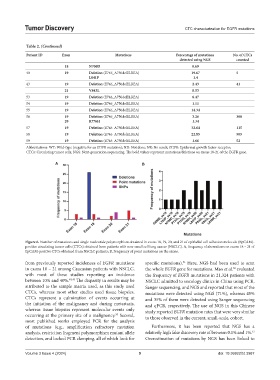
            Figure 6. Number of mutations and single nucleotide polymorphism obtained in exons 18, 19, 20, and 21 of epithelial cell adhesion molecule (EpCAM)-
            positive circulating tumor cells (CTCs) obtained from patients with non-small cell lung cancer (NSCLC). A, frequency of aberrations on exons 18 – 21 of
            EpCAM-positive CTCs obtained from NSCLC patients; B, Frequency of point mutations on the exons.

            from previously reported incidences of EGFR mutations   specific mutations).  Here, NGS had been used to scan
                                                                               51
            in exons 18 – 21 among Caucasian patients with NSCLC,   the whole EGFR gene for mutations. Mao et al.  evaluated
                                                                                                    52
            with most of these studies reporting an incidence   the frequency of EGFR mutations in 21,324 patients with
            between 10% and 40%. 48,49  The disparity in results may be   NSCLC admitted to oncology clinics in China using PCR,
            attributed to the sample matrix used, as this study used   Sanger sequencing, and NGS and reported that most of the
            CTCs,  whereas  most  other  studies  used  tissue  biopsies.   mutations were detected using NGS (71%), whereas 45%
            CTCs represent a culmination of events occurring at   and 35% of them were detected using Sanger sequencing
            the initiation of the malignancy and during metastasis,   and qPCR, respectively. The use of NGS in this Chinese
            whereas tissue biopsies represent molecular events only   study reported EGFR mutation rates that were very similar
            occurring at the primary site of a malignancy.  Second,   to those observed in the current, small-scale, cohort.
                                                  50
            most  published  works  employed  PCR  for  the  analysis
            of mutations (e.g., amplification refractory mutation   Furthermore, it has been reported that NGS has a
            analysis, restriction fragment polymorphism mutant allele   relatively high false discovery rate of between 0.1% and 1%.
                                                                                                            53
            detection, and locked PCR clamping, all of which look for   Overestimation  of  mutations  by  NGS has  been linked  to

            Volume 3 Issue 4 (2024)                         9                                 doi: 10.36922/td.3987

