


Page 96 - AIH-1-2
P. 96
Artificial Intelligence in Health                               Combating XDR-bacteria as we approach 2050


                         A


                         B


                         C


                         D


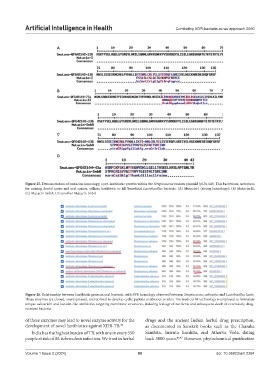
            Figure 25. Demonstration of mutacins homology, a pre-lantibiotic protein within the Streptococcus mutans plasmid (pUA140). This bacterium, notorious
            for causing dental caries and oral cancer, utilizes lantibiotic to kill beneficial Lactobacillus bacteria. (A) Mutacin-I (strong homology); (B) Mutacin-II;
            (C) Mutacin-SnbA; (D) another Mutacin-SnbA


            Figure 26. Relationship between lantibiotic genes in oral bacteria, with 50% homology observed between Streptococcus salivarius and Lactobacillus lactis.
            These enzymes are cloned, overexpressed, and utilized to develop cyclic peptide antibiotics in vitro. The medical AI technology is employed to formulate
            unique salivaricin and lacticin-like antibiotics targeting membrane structures, inducing leakage of nutrients and subsequent death of extensively drug-
            resistant bacteria

            of these enzymes may lead to novel enzyme activity for the   drugs and the ancient Indian herbal drug prescription,
            development of novel lantibiotics against XDR-TB. 30  as documented in Sanskrit books such as the Charaka
              India has the highest burden of TB, with one in every 550   Samhita, Susruta Samhita, and Atharva Veda, dating
            people at risk of M. tuberculosis infection. We trust in herbal   back 3000 years. 46,47  However, phytochemical purification


            Volume 1 Issue 2 (2024)                         90                               doi: 10.36922/aih.2284

