


Page 94 - AIH-1-2
P. 94
Artificial Intelligence in Health                               Combating XDR-bacteria as we approach 2050


            3.6. Target identification of CU1 as RNA polymerase  which destroys gram-positive bacteria. 26,27  It disrupts
            We further investigated the molecular target of CU1   bacterial membrane function and affects DNA and protein
            and identified its inhibition of  E. coli RNA polymerase   structure.  Cyclic  peptide  antibiotics  are  good  and  more
            activity. Among the 11 phytochemicals tested, only CU1   resistant to inactivation by MDR enzymes. Research
            exhibited inhibition comparable to the potent bacterial   is ongoing for the development of salivaricins, nisins,
            RNA polymerase inhibitor known as rifampicin.  As   and related lantibiotics for combating XDR tuberculosis
                                                      16
            rifampicin is a potent anti-TB drug, we tested the efficacy   (XDR-TB). AI is important in understanding the 3D
            of the CU1 drug on  Mycobacterium tuberculosis RNA   structural interaction between drugs and target proteins.
            polymerase, revealing dose-dependent inhibition with   Computer-assisted modification of drugs generated a good
            increasing concentrations of CU1 (Figure 20).  However,   antibiotic with target specificity. For example, 3D crystal
                                                 16
            in the DNA polymerase assay, there was no inhibition of   structure simulation clearly predicted the rifampicin drug’s
            E. coli DNA polymerase by CU1 (Figure 21). CU1 has no   specificity for the M. tuberculosis RNA polymerases and
            potential inhibitory effects on the growth of mammalian   was quite different from other similar RNA polymerases
            cells in culture, revealing that CU1 plays no role in human   of E. coli, S. aureus, and K. pneumoniae. Thus, rifampicin
            RNA polymerase activity (data not shown).          is a first-line drug despite the emergence of  rpoB gene
                                                               (RNA  polymerase  beta-subunit)  mutations  that  confer
            3.7. Lantibiotics research has gained momentum     resistance.  However,  other TB-specific  drugs  such  as
            with AI-guided and computer-assisted 3D graphics
            of drug-enzyme interaction
            The gramicidin peptide antibiotic has been long recognized
            to cure skin infections. It is produced by Bacillus brevis,


                                                               Figure 22. Complex cyclic structures of salivaricin-B lantibiotic that are
                                                               effective against MDR bacteria. This peptide antibiotic was isolated from
                                                               the oral bacteria Streptococcus salivarious, which contained many large
                                                               plasmids with 10 salivaricin lantibiotic synthesizing genes

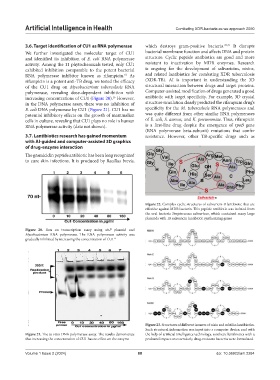
            Figure  20. Run on transcription assay using  sinP plasmid and
            Mycobacterium RNA polymerase. The RNA polymerase activity was
            gradually inhibited by increasing the concentration of CU1 15


                                                               Figure 23. Structures of different isomers of nisin and subtilin lantibiotics.
                                                               Such structural information was input into a computer device, and with
            Figure 21. The in vitro DNA polymerase assay. The results demonstrate   the help of artificial intelligence technology, synthetic lantibiotics with a
            that increasing the concentration of CU1 has no effect on the enzyme  profound impact on extensively drug-resistant bacteria were formulated


            Volume 1 Issue 2 (2024)                         88                               doi: 10.36922/aih.2284

