


Page 90 - AIH-1-2
P. 90
Artificial Intelligence in Health                               Combating XDR-bacteria as we approach 2050


                                                               local vendor near the Midnapore station area and chicken
                                                               meat from a local shop in Midnapore city. Antibiotic
                                                               plates containing ampicillin, cefotaxime, tetracycline,
                                                               streptomycin, ciprofloxacin, and erythromycin were
                                                               selected for the analysis of all collected samples.
                                                                 Next, we presented a few biochemical data supporting
                                                               the  heterogeneity  of  the  MDR  bacterial  population  in
                                                               chicken meat and human hair.  Figure  7 illustrates the
                                                               results of the methyl red assay; Figure 8 demonstrates the
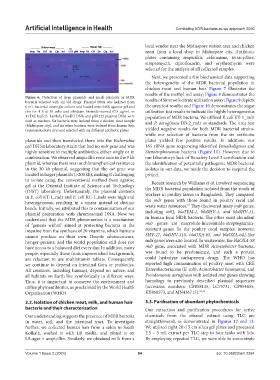
            Figure  6. Detection of large plasmids and small plasmids in MDR
            bacteria  selected  with  six  old  drugs.  Plasmid  DNA  was  isolated  from   results of Simmon’s citrate utilization assay; Figure 9 depicts
            6 mL bacterial overnight culture and loaded onto 0.8% agarose gel and   the urea test results; and Figure 10 demonstrates the sugar
            run for 4  h at 30 volts and ethidium bromide-stained (0.5  µg/mL in   utilization test results to indicate the highly heterogeneous
            1×TAE buffer). Lambda HindIII DNA and pBR322 plasmid DNA were   population of MDR bacteria. We utilized E. coli KT-1_mdr
            used as markers. Six bacteria were isolated from a chicken meat sample   and P. aeruginosa DB-2_mdr as standards. The urea test
            (Midnapore city), and six other bacteria were isolated from human hair
            (salon in Kolkata city) and selected with six different antibiotic plates  yielded negative results for both MDR bacterial strains,
                                                               while our selection of bacteria from the six antibiotic
            plasmids and then transfected them into the Escherichia   plates yielded few positive results. In addition, our
            coli DH5α laboratory strain that had no mdr gene and was   16S rRNA gene sequencing identified Panalkaligenes and
            highly sensitive to multiple antibiotics, either singly or in   Stenotrophonomas bacteria (Figure 11). However, due to
            combination. We observed ampicillin resistance in the 3 kb   our laboratory’s lack of Biosafety Level 3 certification and
            plasmid, whereas there was no chloramphenicol resistance   the identification of potentially pathogenic MDR bacterial
            in the 30  kb plasmid, suggesting that the  cat gene was   isolates in our data, we made the decision to suspend the
            located in larger plasmids (>200 kb), making it challenging   project.
            to  isolate  using  the  conventional  method  from  agarose   Recent research by Williams et al. involved sequencing
            gel at the Oriental Institute of Science and Technology   the MDR bacterial population isolated from the stools of
            (OIST) laboratory. Unfortunately, the plasmid contents   workers in poultry farms in Bangladesh. They compared
            in E. coli KT-1_mdr and E. coli KC-1_mdr were high and
            heterogeneous, resulting in a smear instead of distinct   the  mdr  genes  with  those  found  in  poultry  cecal  and
                                                                                 23
            bands. Initially, we attributed this to contamination of our   waste water resources.  They discovered many mdr genes,
            plasmid preparation with chromosomal DNA. Now, we   including  tetQ,  blaTEM-1,  blaSHV-1,  and  blaSHV-11,
            understand that the MDR phenomenon is a mechanism   in human fecal MDR bacteria. The other most abundant
            of “genesis within” aimed at protecting bacteria in the   mdr genes are macrolide-lincosamide-streptogramin-
            intestine from the synthesis of 20 vitamins, which humans   resistant genes. In the poultry cecal samples, however,
            cannot produce on their own. Despite advancements,   SHV-27, blaSHV-110, blaOXA-65, and blaOXA-641-like
            hunger persists, and the world population still does not   mdr genes were also located. In wastewater, the blaOXA-58
            have access to a balanced diet every day. In addition, many   mdr  gene, associated  with  MDR  Acinetobacter  bacteria,
            people, especially those from impoverished backgrounds,   was found to be predominant, and such a protein
            are reluctant to  use  multivitamin  tablets.  Consequently,   could hydrolyze carbapenem drugs. The WHO has
            we continue to depend on intestinal flora or probiotics.   reported high contamination of poultry meat with CRE
            All creatures, including humans, depend on nature, and   Enterobacteriaceae (E. coli), Acinetobacter baumannii, and
            all habitats on Earth live symbiotically in different ways.   Pseudomonas aeruginosa with isolated mdr genes showing
            Thus, it is important to conserve the environment and   homology to previously described plasmid sequences
            utilize phytoantibiotics, as proclaimed by the World Health   (accession numbers: CP058135, LC75731, CP054855,
            Organization (WHO).                                KY860573, and MN436715). 24,25

            3.2. Isolation of chicken meat, milk, and human hair   3.3. Purification of abundant phytochemicals
            bacteria and their characterization                Our  extraction and purification  procedures  for active
            Our understanding suggests the presence of MDR bacteria   chemicals from the ethanol extract using TLC are
            in water, soil, and the intestinal tract. To investigate   straightforward, as demonstrated in  Figures  12  and  13.
            further, we collected human hair from a salon in South   We utilized eight 20×15 cm silica gel plates and processed
            Kolkata, washed it with LB media, and plated it on   2.5 – 3 mL extract per TLC step in four tanks with lids.
            LB-agar + ampicillin. Similarly, we obtained milk from a   By employing repeated TLC, we were able to concentrate


            Volume 1 Issue 2 (2024)                         84                               doi: 10.36922/aih.2284

