


Page 92 - AIH-1-2
P. 92
Artificial Intelligence in Health                               Combating XDR-bacteria as we approach 2050


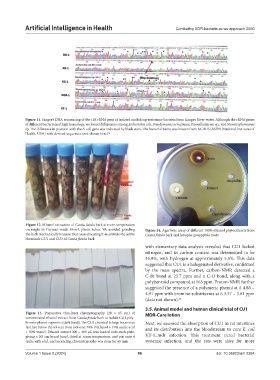
            Figure 11. Sanger’s DNA sequencing of the 16S rRNA gene of isolated multidrug-resistance bacteria from Ganges River water. Although the rRNA genes
            of different bacteria had high homology, we found differences among Escherichia coli, Pseudomonas aeruginosa, Paenalkaligenes sp., and Stenotrophomonas
            sp. The difference in position with the E. coli gene was indicated by black stars. The bacterial name was known from NCBI BLASTN (National Institutes of
            Health, USA) with derived sequences (not shown here) 14


            Figure 12. Ethanol extraction of Cassia fistula bark at room temperature
            overnight in German-made 50-mL plastic tubes. We avoided grinding   Figure 14. Agar hole assay of different 100% ethanol phytoextracts from
            the bark mechanically because that caused heating to inactivate the active   Cassia fistula bark and Jatropha gossypifolia roots
            chemicals CU1 and CU3 of Cassia fistula bark
                                                               with elementary data analysis revealed that CU1 lacked
                                                               nitrogen, and its carbon content was determined to be
                                                               35.9%, with hydrogen at approximately 5.5%. This data
                                                               suggested that CU1 is a halogenated derivative, confirmed
                                                               by the mass spectra. Further, carbon-NMR detected a
                                                               C-Br bond at 23.7  ppm and a C-O bond, along with a
                                                               polybenzoid compound at 165 ppm. Proton-NMR further
                                                               suggested the presence of a polymeric phenol at ό 4.86 –
                                                               4.91 ppm with bromine substituents at ό 3.57 – 3.61 ppm
                                                               (data not shown). 16
                                                               3.5. Animal model and human clinical trial of CU1
            Figure  13. Preparative thin-layer chromatography (20 × 15  cm) of   MDR-Cure lotion
            concentrated ethanol extract from Cassia fistula bark to isolate CU1 poly-
            bromo-phenol-saponins (dark band). The CU1 chemical is large but moves   Next, we assessed the absorption of CU1 in rat intestines
            fast just below the solvent front (solvent: 40% methanol + 10% acetic acid   and its distribution into the bloodstream to cure E. coli
            + 50% water). Ethanol extract 300 – 400 µL was loaded onto each plate,
            giving a 0.5 cm broad band, dried at room temperature, and put onto 4   KT-1_mdr infection. This treatment cured bacterial
            tanks with a lid, and ascending chromatography was done for 65 min  systemic infection, and the rats were alive for more

            Volume 1 Issue 2 (2024)                         86                               doi: 10.36922/aih.2284

