


Page 121 - AIH-1-4
P. 121
Artificial Intelligence in Health                        Complex early diagnosis of MS through machine learning


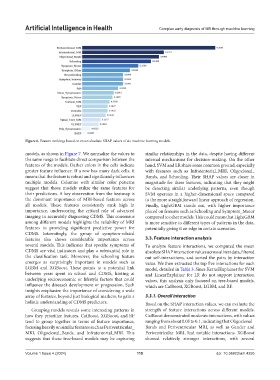
            Figure 6. Feature rankings based on mean absolute SHAP values of six machine learning models.

            models, as shown in Figure 7. We normalize the values to   similar relationships in the data, despite having different
            the same range to facilitate direct comparison between the   internal mechanisms for decision-making. On the other
            features of the models. Darker colors in the cells indicate   hand, SVM and LR share some common ground, especially
            greater feature influence. If a row has many dark cells, it   with features such as Infratentorial_MRI, Oligoclonal_
            means that the feature is robust and significantly influences   Bands, and Schooling. Their SHAP values are closer in
            multiple models. Columns with similar color patterns   magnitude for these features, indicating that they might
            suggest that  those  models  utilize  the  same  features  for   be  detecting similar underlying patterns, even though
            their predictions. A key observation from the heatmap is   SVM operates in a higher-dimensional space compared
            the dominant importance of MRI-based features across   to the more straightforward linear approach of regression.
            all models. These features consistently rank high in   Finally, LightGBM stands out, with higher importance
            importance, underscoring  the critical  role of  advanced   placed on features such as Schooling and Symptom_Motor
            imaging in accurately diagnosing CDMS. This consensus   compared to other models. This could mean that LightGBM
            among different models highlights the reliability of MRI   is more sensitive to different types of patterns in the data,
            features in providing significant predictive power for   potentially giving it an edge in certain scenarios.
            CDMS. Interestingly, the group of symptom-related
            features also shows considerable importance across   3.3. Feature interaction analysis
            several models. This indicates that specific symptoms of   To analyze feature interactions, we computed the mean
            CDMS are vital indicators and play a substantial role in   absolute SHAP interaction values across all test data, filtered
            the classification task. Moreover, the schooling feature   out self-interactions, and sorted the pairs by interaction
            emerges as surprisingly important in models such as   value. We then extracted the top five interactions for each
            LGBM and XGBoost. These points to a potential link   model, detailed in Table 3. Since KernelExplainer for SVM
            between years spent in school and CDMS, hinting at   and  LinearExplainer  for  LR  do  not  support  interaction
            underlying  socioeconomic  or lifestyle factors that  could   values, this analysis only focused on tree-based models,
            influence the disease’s development or progression. Such   which are CatBoost, XGBoost, LGBM, and RF.
            insights emphasize the importance of considering a wide
            array of features, beyond just biological markers, to gain a   3.3.1. Overall interaction
            holistic understanding of CDMS predictors.         Based on the SHAP interaction values, we can evaluate the

              Grouping models reveals some interesting patterns in   strength of feature interactions across different models.
            how they prioritize features. CatBoost, XGBoost, and RF   CatBoost demonstrated moderate interactions, with values
            tend to group together in terms of feature importance,   ranging from about 0.05 to 0.1, indicating that Oligoclonal_
            focusing heavily on similar features such as Periventricular_  Bands and Periventricular_MRI,  as well as Gender and
            MRI, Oligoclonal_Bands, and Infratentorial_MRI. This   Periventricular_MRI,  had notable interactions. XGBoost
            suggests that these tree-based models may be capturing   showed relatively stronger interactions, with several


            Volume 1 Issue 4 (2024)                        115                               doi: 10.36922/aih.4255

