


Page 123 - AIH-1-4
P. 123
Artificial Intelligence in Health                        Complex early diagnosis of MS through machine learning


            Table 3. Top five feature interactions for tree‑based models  3.3.3. Interaction between gender and
                                                               Periventricular_MRI
            Model      Feature 1      Feature 2   Interaction
                                                    value      Gender also has a significant interaction with
            CatBoost  Oligoclonal_Bands  Periventricular_MRI  0.097347  Periventricular_MRI, as depicted in  Figure  9. All
                    Gender         Periventricular_MRI  0.078551  three models with the highest prediction performance
                    Oligoclonal_Bands  Varicella   0.070430    (CatBoost, XGBoost, and LGBM) effectively capture this
                    Symptom_Sensory  Symptom_Vision  0.067328  interaction, as indicated by the distinct clusters of colors
                    Periventricular_MRI VEP        0.057325    in the subplots. For females (Gender = 0), the interaction
            XGBoost  Oligoclonal_Bands  Periventricular_MRI  0.131877  values clustered around zero, suggesting that MRI findings
                    Gender         Periventricular_MRI  0.099022  have a more balanced impact. In contrast, males (Gender
                                                               = 1) showed more distinct interaction values, especially
                    Symptom_Motor  ULSSEP          0.077204    when periventricular lesions were present, indicating that
                    Age            Cortical_MRI    0.069749    the presence of these lesions in males has a greater impact
                    Mono_Symptomatic  Symptom_Sensory  0.067236  on the prediction. This pattern suggests a potential gender-
            LGBM    Symptom_Motor  ULSSEP          0.106938    related difference in how periventricular lesions influence
                    Oligoclonal_Bands  Periventricular_MRI  0.063874  model predictions, which could have implications
                    Mono_Symptomatic  Symptom_Sensory  0.062791  for understanding gender-specific  progression  or
                    Mono_Symptomatic  Symptom_Vision  0.062664  manifestation of neurological conditions associated with
                    Breastfeeding  Mono_Symptomatic  0.058049  these features.
            RF      Oligoclonal_Bands  Periventricular_MRI  0.009170
                    Gender         Periventricular_MRI  0.007391  3.3.4. Interaction between Symptom_Motor and
                    Infratentorial_MRI  Oligoclonal_Bands  0.006605  ULSSEP
                    Infratentorial_MRI  Periventricular_MRI  0.004550  Another significant pair of features is Symptom_Motor
                    Oligoclonal_Bands  Varicella   0.004510    and ULSSEP, visualized in  Figure  10. ULSSEP stands
            Abbreviations: CatBoost: Categorical boosting; LGBM: Light gradient   for upper limb somatosensory evoked potentials. It is a
            boosting machine; RF: Random forest; XGBoost: Extreme gradient   diagnostic test that measures the electrical activity in the
            boosting.                                          brain in response to stimulation of the sensory nerves in


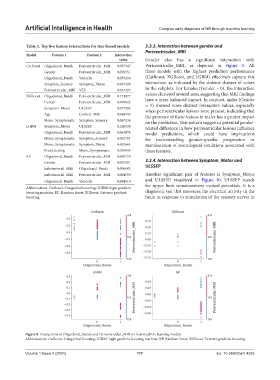
            Figure 8. Interactions of Oligoclonal_Bands and Periventricular_MRI on four machine learning models
            Abbreviations: CatBoost: Categorical boosting; LGBM: Light gradient boosting machine; RF: Random forest; XGBoost: Extreme gradient boosting.


            Volume 1 Issue 4 (2024)                        117                               doi: 10.36922/aih.4255

