


Page 122 - AIH-1-4
P. 122
Artificial Intelligence in Health                        Complex early diagnosis of MS through machine learning


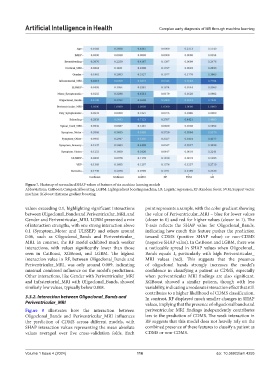
            Figure 7. Heatmap of normalized SHAP values of features of six machine learning models
            Abbreviations: CatBoost: Categorical boosting; LGBM: Light gradient boosting machine; LR: Logistic regression; RF: Random forest; SVM: Support vector
            machine; XGBoost: Extreme gradient boosting.

            values exceeding 0.1, highlighting significant interactions   point represents a sample, with the color gradient showing
            between Oligoclonal_Bands and Periventricular_MRI, and   the value of Periventricular_MRI – blue for lower values
            Gender and Periventricular_MRI. LGBM presented a mix   (closer to 0) and red for higher values (closer to 1). The
            of interaction strengths, with one strong interaction above   Y-axis reflects the SHAP value for Oligoclonal_Bands,
            0.1 (Symptom_Motor and ULSSEP) and others around   indicating how much this feature pushes the prediction
            0.06,  such  as  Oligoclonal_Bands  and  Periventricular_  toward CDMS (positive SHAP value) or non-CDMS
            MRI. In contrast, the RF model exhibited much weaker   (negative SHAP value). In CatBoost and LGBM, there was
            interactions, with values significantly lower than those   a noticeable spread in SHAP values when Oligoclonal_
            seen in CatBoost, XGBoost, and LGBM. The highest   Bands equals 1, particularly with high Periventricular_
            interaction value in RF, between Oligoclonal_Bands and   MRI values (red). This suggests that the presence
            Periventricular_MRI, was only around 0.009, indicating   of oligoclonal bands strongly increases the model’s
            minimal combined influence on the model’s predictions.   confidence in classifying a patient as CDMS, especially
            Other interactions, like Gender with Periventricular_MRI   when periventricular MRI findings are also significant.
            and Infratentorial_MRI with Oligoclonal_Bands, showed   XGBoost showed a similar pattern, though with less
            similarly low values, typically below 0.008.       variability, indicating a moderate interaction effect that still
                                                               contributes to a higher likelihood of CDMS classification.
            3.3.2. Interaction between Oligoclonal_Bands and   In contrast, RF displayed much smaller changes in SHAP
            Periventricular_MRI                                values, implying that the presence of oligoclonal bands and
            Figure  8 illustrates  how the interaction between   periventricular MRI findings independently contributes
            Oligoclonal_Bands and Periventricular_MRI influences   less to the prediction of CDMS. The weak interaction in
            the prediction of CDMS across different models, with   RF suggests that this model does not heavily rely on the
            SHAP interaction values representing the mean absolute   combined presence of these features to classify a patient as
            values averaged over five cross-validation folds. Each   CDMS or non-CDMS.


            Volume 1 Issue 4 (2024)                        116                               doi: 10.36922/aih.4255

