


Page 57 - AIH-1-4
P. 57
Artificial Intelligence in Health A fuzzy system for heartbeat classification
A B
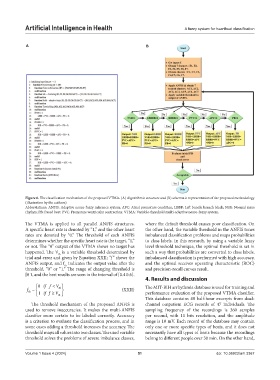
Figure 6. The classification mechanism of the proposed VTMA. (A) Algorithmic structure and (B) schematic representation of the proposed methodology
(illustration by the authors)
Abbreviations: ANFIS: Adaptive neuro-fuzzy inference system; APC: Atrial premature condition; LBBB: Left bundle branch block; NSR: Normal sinus
rhythm; PB: Paced beat; PVC: Premature ventricular contraction; VTMA: Variable-threshold multi-adaptive neuro-fuzzy system.
The VTMA is applied to all parallel ANFIS structures. where the default threshold causes poor classification. On
A specific heart rate is denoted by “1,” and the other heart the other hand, the variable threshold in the ANFIS tunes
rates are denoted by “0.” The threshold of each ANFIS imbalanced classification problems and maps probabilities
determines whether the specific heart rate is the target, “1,” to class labels. In this research, by using a variable fuzzy
or not. The “0” output of the VTMA shows no target has level threshold technique, the optimal threshold is set in
happened. The V is a variable threshold determined by such a way that probabilities are converted to class labels,
th
trial and error and given by Equation XXII; “f” shows the imbalanced classification is performed with high accuracy,
ANFIS output, and f indicates the output value after the and the optimal receiver operating characteristic (ROC)
th
threshold, “0” or “1.” The range of changing threshold is and precision-recall curves result.
[0 1, and the best results are seen in the interval of [0.4 0.6].
4. Results and discussion
0 if f < V The MIT-BIH arrhythmia database is used for training and
f = th (XXII)
th
1 if f ≥ V th performance evaluation of the proposed VTMA classifier.
This database contains 48 half-hour excerpts from dual-
The threshold mechanism of the proposed ANFIS is channel outpatient ECG records of 47 individuals. The
used to remove inaccuracies. It makes the multi-ANFIS sampling frequency of the recordings is 360 samples
classifier more certain to be labeled correctly. Accuracy per second, with 11 bits resolution, and the amplitude
is a criterion to evaluate the classification process, and in range is 10 mV. Each record of the database may contain
some cases adding a threshold increases the accuracy. The only one or more specific types of beats, and it does not
threshold maps all values into two classes. The used variable necessarily have all types of beats because the recordings
threshold solves the problems of severe imbalance classes, belong to different people over 30 min. On the other hand,
Volume 1 Issue 4 (2024) 51 doi: 10.36922/aih.3367

