


Page 223 - AJWEP-22-4
P. 223
Porosity-driven biomass combustion


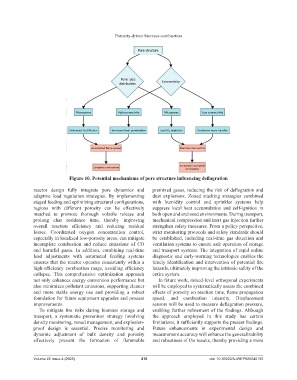
                                Figure 10. Potential mechanisms of pore structure influencing deflagration

                reactor  design fully integrate  pore dynamics and   premixed gases, reducing the risk of deflagration and
                adaptive  load regulation  strategies.  By implementing   dust  explosions.  Zoned  stacking  strategies  combined
                staged feeding and optimizing structural configurations,   with humidity control  and sprinkler systems help
                regions  with  different  porosity  can  be  effectively   suppress local  heat  accumulation  and self-ignition  in
                matched  to promote  thorough  volatile  release  and   both open and enclosed environments. During transport,
                prolong char residence time, thereby improving      mechanical compression and inert gas injection further
                overall  reaction  efficiency  and  reducing  residual   strengthen safety measures. From a policy perspective,
                losses. Coordinated  oxygen concentration  control,   strict monitoring protocols and safety standards should
                especially in localized low-porosity areas, can mitigate   be established, including  real-time  gas detection  and
                incomplete  combustion and reduce emissions of CO   ventilation systems to ensure safe operation of storage
                and harmful gases. In addition,  combining  real-time   and transport systems. The integration of rapid online
                load  adjustments with automated  feeding  systems   diagnostic and early-warning technologies enables the
                ensures that the reactor operates consistently within a   timely identification and intervention of potential fire
                high-efficiency  combustion  range,  avoiding  efficiency   hazards, ultimately improving the intrinsic safety of the
                collapse.  This  comprehensive  optimization  approach   entire system.
                not only enhances energy conversion performance but    In future work, mixed-level orthogonal experiments
                also minimizes pollutant emissions, supporting cleaner   will be employed to systematically assess the combined
                and  more  stable  energy  use  and  providing  a  robust   effects of porosity on reaction time, flame propagation
                foundation for future equipment upgrades and process   speed,  and  combustion  intensity.  Displacement
                improvements.                                       sensors will be used to measure deflagration pressure,
                  To  mitigate  fire  risks  during  biomass  storage  and   enabling  further  refinement  of  the  findings. Although
                transport, a systematic  prevention  strategy involving   the  approach  employed  in this study has certain
                density monitoring, zoned management, and explosion-  limitations, it sufficiently supports the present findings.
                proof design  is essential.  Precise  monitoring  and   Future enhancements  in experimental  design and
                dynamic adjustment of bulk density and porosity     measurement accuracy will enhance the generalizability
                effectively  prevent  the  formation  of  flammable   and robustness of the results, thereby providing a more


                Volume 22 Issue 4 (2025)                       215                           doi: 10.36922/AJWEP025240193

