


Page 81 - ARNM-2-3
P. 81
Advances in Radiotherapy
            & Nuclear Medicine                                                    OrthoCT experimental proof of concept


            2.2. Data acquisition system and digital analysis  The active base gain control voltage used for each PMT was

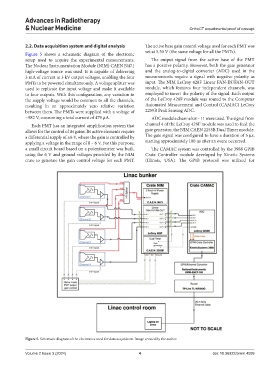
            Figure  5 shows a  schematic  diagram of the electronic   set at 5.30 V (the same voltage for all the PMTs).
            setup used to acquire the experimental measurements.   The  output  signal  from  the  active  base  of  the  PMT
            The Nuclear Instrumentation Module (NIM) CAEN N471   has a positive polarity. However, both the gate generator
            high-voltage source was used. It is capable of delivering   and the analog-to-digital converter (ADC) used in the
            3 mA of current at 3 kV output voltages, enabling the four   measurements require a signal with negative polarity as
            PMTs to be powered simultaneously. A voltage splitter was   input. The NIM LeCroy 428F Linear FAN-IN/FAN-OUT
            used to replicate the input voltage and make it available   module, which features four independent channels, was
            to four outputs. With this configuration, any variation in   employed to invert the polarity of the signal. Each output
            the supply voltage would be common to all the channels,   of the LeCroy 428F module was routed to the Computer
            resulting in an approximately zero relative variation   Automated Measurement and Control (CAMAC) LeCroy
            between them. The PMTs were supplied with a voltage of   2259B Peak Sensing ADC.
            −982 V, consuming a total current of 479 µA.         ADC module channels 8 – 11 were used. The signal from
              Each PMT has an integrated amplification system that   channel 4 of the LeCroy 428F module was used to feed the
            allows for the control of its gains. Its active elements require   gate generator, the NIM CAEN 2255B Dual Timer module.
            a differential supply of ±6 V, where the gain is controlled by   The gate signal was configured to have a duration of 5 µs,
            applying a voltage in the range of 0 – 6 V. For this purpose,   starting approximately 100 ns after an event occurred.
            a small circuit board based on a potentiometer was built,   The CAMAC system was controlled by the 3988 GPIB
            using the 6 V and ground voltages provided by the NIM   Crate Controller module developed by Kinetic Systems
            crate to generate the gain control voltage for each PMT.   (Illinois, USA). The GPIB protocol was utilized for


            Figure 5. Schematic diagram of the electronics used for data acquisition. Image created by the author.


            Volume 2 Issue 3 (2024)                         4                              doi: 10.36922/arnm.4099

