


Page 59 - DP-1-1
P. 59
Design+                                                        Approximate signed multipliers design approach


                                                               Specifically, the results indicate that the proposed
                                                               multiplier improves delay by at least 13%, reduces power
                                                               consumption by 12%, and decreases area by 9%, resulting
                                                               in a 9% improvement in the power-delay product compared
                                                               to the other designs.

                                                               4.2. Accuracy analysis
                                                               The accuracy analysis involves calculating metrics such as
                                                               the normalized mean error distance (NMED) and mean
                                                               relative error distance (MRED) to evaluate performance.
                                                               In addition, the number of effective bits (NoEB) is used to
                                                               measure error-free output bits, as these metrics provide a
                                                               more suitable comparison between different architectures
                                                               than basic metrics such as error rate and error distance. 36
                                                                 Although NMED and MRED provide a general
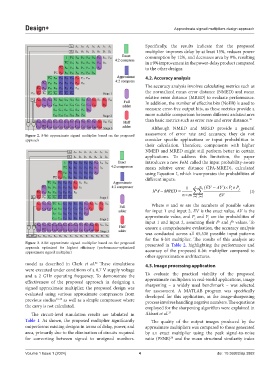
            Figure  2. 8-bit approximate signed multiplier based on the proposed   assessment  of  error  rate and  accuracy,  they do not
            approach                                           consider specific applications or input probabilities in
                                                               their  calculation.  Therefore,  components  with  higher
                                                               NMED and MRED might still perform better in certain
                                                               applications. To address this limitation, the paper
                                                               introduces a new FoM called the input probability-aware
                                                               mean relative error distance (IPA-MRED), calculated
                                                               using Equation I, which incorporates the probabilities of
                                                               different inputs:
                                                                                1   n  m  (EV −  AV ) P P×  ×
                                                                  IPA MRED−  =     ∑∑              i   j   (I)
                                                                               n m×  i= 1 j= 1  EV

                                                                 Where  n and  m are the  numbers  of possible  values
                                                               for input 1 and input 2, EV is the exact value, AV is the
                                                               approximate value, and P  and P  are the probabilities of
                                                                                    i
                                                                                          j
                                                                                                   th
                                                               input 1 and input 2, assuming their i  and j  values. To
                                                                                              th
                                                               ensure a comprehensive evaluation, the accuracy analysis
                                                               was conducted across all 65,536 possible input patterns
                                                               for the 8-bit multiplier. The results of this analysis are
            Figure  3. 8-bit approximate signed multiplier based on the proposed   presented in  Table 2, highlighting the performance and
            approach optimized for highest efficiency (performance-optimized
            approximate signed multiplier)                     accuracy  of  the  proposed  8-bit  multiplier  compared  to
                                                               other approximation architectures.
            model as described in Clark  et al.  These simulations   4.3. Image processing application
                                         32
            were executed under conditions of a 0.7 V supply voltage
            and a 2 GHz operating frequency. To demonstrate the   To evaluate the practical viability of the proposed
            effectiveness of the proposed approach in designing a   approximate multipliers in real-world applications, image
            signed approximate multiplier, the proposed design was   sharpening – a widely used benchmark – was selected
                                                               for  assessment.  A  MATLAB program was  specifically
            evaluated using various approximate compressors from   developed for this application, as the image-sharpening
            previous studies 33-35  as well as a simple compressor where   process involves handling negative numbers. The equations
            the carry is not calculated.                       employed for the sharpening algorithm were explained in

              The circuit-level simulation results are tabulated in   Akbari et al. 37
            Table 1. As shown, the proposed multiplier significantly   The quality of the output images produced by the
            outperforms existing designs in terms of delay, power, and   approximate multipliers was compared to those generated
            area, primarily due to the elimination of circuits required   by an exact multiplier using the peak signal-to-noise
            for converting between signed to unsigned numbers.   ratio (PSNR)  and the mean structural similarity index
                                                                          38

            Volume 1 Issue 1 (2024)                         4                                doi: 10.36922/dp.3882

