


Page 67 - DP-1-1
P. 67
Design+                                                                Defect-oriented BIST for AMS circuits


            operation. The main requirements in designing of BIST
            are its transparency with respect to the main circuit. BIST
            should have zero effect on the normal operation of the
            circuit. In addition to this, BIST should be fast and have
            a small area and power overhead in comparison to the
            main circuit. For digital circuits, meeting these main BIST
            requirements is generally easier compared to AMS circuits,
            primarily due to the significantly higher sensitivity of
            AMS circuits. Moreover, the occurrence of a defect has
            a more noticeable effect on a digital circuit. Most of the
            hard defects in digital circuits would be manifested by a
            stuck-on high or stuck-on low logic, which can be detected
            with near zero additional resources. However, in AMS
            circuits, a similar defect might not significantly change the
            performance of the circuit.

              We propose a defect-oriented BIST for AMS circuits that
            exclusively utilizes digital circuits, resulting in lower power
            consumption  and  typically  smaller  area  requirements
            compared to AMS circuits. In addition, digital-like AMS
            BIST can itself be tested using digital methods before
            performing the test on the AMS circuits. Furthermore,
            the digital-like AMS BIST is also easier to migrate from
            one technology node to another, reducing the need for a
            redesign of BIST. Using digital-like BIST, the result of the
            test can be easily routed for inference within IC using well-
            defined digital protocols.
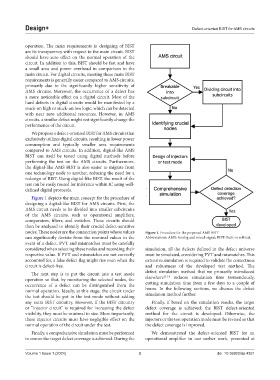
              Figure 1 depicts the main concept for the procedure of
            designing a digital-like BIST for AMS circuits. First, the
            AMS circuit needs to be divided into smaller subcircuits
            of the AMS circuits, such as operational amplifiers,
            comparators, filters, and switches. These circuits should
            then be analyzed to identify their crucial defect-sensitive
            nodes. These nodes are the connection points whose values   Figure 1. Procedure for the proposed AMS BIST
            can significantly deviate from the nominal values in the   Abbreviations: AMS: Analog and mixed-signal; BIST: Built-in self-test.
            event of a defect. PVT and mismatches must be carefully
            considered when selecting these nodes and recording their   simulation, all the defects defined in the defect universe
            respective value. If PVT and mismatches are not correctly   must be simulated, considering PVT and mismatches. This
            accounted for, a false defect flag might rise even when the   extensive simulation is required to validate the correctness
            circuit is defect-free.                            and robustness of the developed test method. The
              The next  step is  to put the circuit into a  test mode   defect simulation method that we primarily introduced
            operation so that, by monitoring the selected nodes, the   elsewhere 12-14  reduces simulation time tremendously,
            occurrence of a defect can be distinguished from the   cutting simulation time from a few days to a couple of
            normal operation. Ideally, at this stage, the circuit under   hours. In the following sections, we discuss the defect
            the test should be put in the test mode without adding   simulation method further.
            any extra BIST circuitry. However, if the BIST circuitry   Finally, if based on the simulation results, the target
            or “injector circuit” is required for increasing the defect   defect coverage is achieved; the BIST defect-oriented
            visibility, they must be minimal in size. More importantly,   method for the circuit is developed. Otherwise, the
            these injector circuits must have negligible effect on the   injectors or the test operation mode must be revised so that
            normal operation of the circuit under the test.    the defect coverage is improved.
              Finally, a comprehensive simulation must be performed   We demonstrated the defect-oriented BIST for an
            to ensure the target defect coverage is achieved. During the   operational amplifier in our earlier work, presented at


            Volume 1 Issue 1 (2024)                         3                                doi: 10.36922/dp.4351

