


Page 20 - ESAM-1-2
P. 20
Engineering Science in
            Additive Manufacturing                                             AM-CFRP structures for EMWA properties


            A                               B                                C


            D                               E                                F


            G                                  H                             I


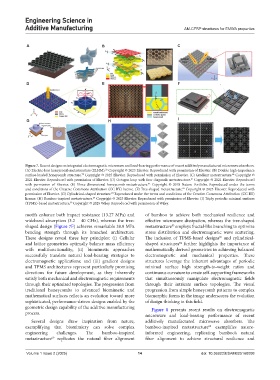
            Figure 7. Recent designs on integrated electromagnetic microwave and load-bearing performance of recent additively manufactured microwave absorbers.
            (A) Electric-loss honeycomb metastructure (ELHM).  Copyright © 2023 Elsevier. Reproduced with permission of Elsevier. (B) Double high-impedance
                                              22
                                                                                                    66
                                    75
            surface-loaded honeycomb structure.  Copyright © 2025 Elsevier. Reproduced with permission of Elsevier. (C) Gradient metastructure.  Copyright ©
                                                                                  81
            2021 Elsevier. Reproduced with permission of Elsevier. (D) Octagon loop with four diagonals metastructure.  Copyright © 2021 Elsevier. Reproduced
                                                                82
            with permission of Elsevier. (E) Three-dimensional honeycomb metastructure.  Copyright © 2018 Nature Portfolio. Reproduced under the terms
            and conditions of the Creative Commons Attribution (CC BY) license. (F) Tree-shaped metastructure.  Copyright © 2025 Elsevier. Reproduced with
                                                                               83
                                                84
            permission of Elsevier. (G) Cylindrical-shaped structure.  Reproduced under the terms and conditions of the Creative Commons Attribution (CC BY)
                                         69
            license. (H) Bamboo-inspired metastructure.  Copyright © 2023 Elsevier. Reproduced with permission of Elsevier. (I) Triply periodic minimal surfaces
            (TPMS)-based metastructure.  Copyright © 2025 Wiley. Reproduced with permission of Wiley.
                               85
            motifs enhance both impact resistance (13.27 MPa) and   of bamboo to achieve both mechanical resilience and
            wideband  absorption (3.2  –  40  GHz),  whereas  the  tree-  effective microwave dissipation, whereas the tree-shaped
            shaped design (Figure 7F) achieves remarkable 38.8 MPa   metastructure  employs fractal-like branching to optimize
                                                                          83
            bending strength through its branched architecture.   stress distribution and electromagnetic wave scattering.
            These designs reveal three key principles: (i) Cellular   The inclusion of TPMS-based designs  and cylindrical-
                                                                                              85
            and lattice geometries optimally balance mass efficiency   shaped structures  further highlights the importance of
                                                                             84
            with multifunctionality; (ii) biomimetic approaches   mathematically derived geometries in achieving balanced
            successfully translate natural load-bearing strategies to   electromagnetic and mechanical properties. These
            electromagnetic applications; and (iii) gradient designs   structures leverage the inherent advantages of periodic
            and TPMS architectures represent particularly promising   minimal surface high strength-to-weight ratios and
            directions for future development, as they inherently   continuous curvature to create self-supporting frameworks
            satisfy both mechanical and electromagnetic requirements   that simultaneously manipulate electromagnetic fields
            through their optimized topologies. The progression from   through their intricate surface topologies. The visual
            traditional  honeycombs  to  advanced  biomimetic  and   progression from simple honeycomb patterns to complex
            mathematical surfaces reflects an evolution toward more   biomorphic forms in the image underscores the evolution
            sophisticated, performance-driven designs enabled by the   of design thinking in this field.
            geometric design capability of the additive manufacturing   Figure  8 presents recent results on electromagnetic
            process.                                           microwave and load-bearing performance of recent
              Several designs draw inspiration from nature,    additively manufactured microwave absorbers. The
            exemplifying that biomimicry can solve complex     bamboo-inspired metastructure  exemplifies nature-
                                                                                          69
            engineering  challenges.  The   bamboo-inspired    informed engineering, replicating bamboo’s  natural
            metastructure  replicates the natural fiber alignment   fiber alignment to achieve structural resilience and
                       69

             Volume 1 Issue 2 (2025)                        14                         doi: 10.36922/ESAM025160008

