


Page 73 - IJAMD-1-1
P. 73
International Journal of AI
            for Material and Design                                           Machine learning for gripper state prediction


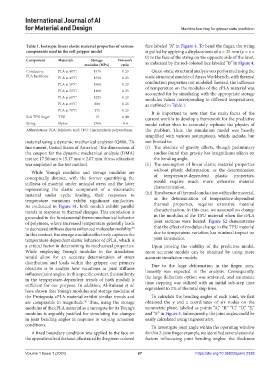
            Table 1. Isotropic linear elastic material properties of various   face labeled “A” in Figure 4. To bend the finger, the string
            components used in the soft gripper model          is pulled by applying a displacement of x = 25 mm (y = z =
                                                               0) to the face of the string on the opposite side of the knot,
            Component     Materials     Storage    Poisson’s
                                     modulus (MPa)   ratio     as indicated by the red-colored face labeled “B” in Figure 4.
            Conductive    PLA at 40°C    1575        0.23        Quasi-static structural analysis was performed using the
            PLA backbone  PLA at 45°C    1550        0.23      static structural module of Ansys Workbench, with thermal
                          PLA at 50°C    1500        0.23      conduction properties not modeled. Instead, the influence
                                                               of temperature on the modulus of the cPLA material was
                          PLA at 55°C    1400        0.23
                                                               accounted for by simulating with the appropriate storage
                          PLA at 60°C    1225        0.23      modulus values corresponding to different temperatures,
                          PLA at 65°C    888         0.23      as outlined in Table 1.
                          PLA at 70°C    375         0.23        It is important to note that the main focus of the
            Soft TPU finger  TPU          15         0.48      current work is to develop a framework for the predictive
            String        Nylon          2700        0.4       model rather than to accurately replicate the physics of
            Abbreviations: PLA: Polylactic acid; TPU: Thermoplastic polyurethane.  the problem. Thus, the simulation model was heavily
                                                               simplified with various assumptions, which include, but
            material using a dynamic mechanical analyzer (Q800, TA   not limited to:
            Instrument, United States of America). The dimensions of   (i)  The  absence  of gravity effects,  though  preliminary
            the coupon for the dynamic mechanical analysis (DMA)   studies found that gravity has insignificant effects on
            test are 17.50 mm × 15.17 mm × 2.07 mm. Stress relaxation   the bending angle.
            was employed as the test method.                   (ii)  The assumption of linear elastic material properties
              While Young’s modulus and storage modulus are       without plastic deformation, as the determination
            conceptually distinct, with the former quantifying the   of  temperature-dependent  plastic  properties,
            stiffness of material under uniaxial stress and the latter   would require much more extensive material
            representing the elastic component of a viscoelastic   characterization.
            material under cyclic loading, their responses to   (iii) The absence of thermal conduction within the material,
            temperature variations exhibit significant similarities.   as the determination of temperature-dependent
            As evidenced in  Figure S1, both moduli exhibit parallel   thermal properties, requires extensive material
            trends in response to thermal changes. This correlation is   characterization. In this case, we assumed no change
            grounded in the fundamental thermomechanical behavior   in the modulus of the TPU material when the cPLA
            of polymers, where increased temperature generally leads   joint sections were heated.  Figure S2 demonstrates
            to decreased stiffness due to enhanced molecular mobility.    that the effect of modulus change in the TPU material
                                                         29
            In this context, the storage modulus effectively captures the   due to temperature variation has minimal impact on
            temperature-dependent elastic behavior of cPLA, which is   joint kinematics.
            a critical factor in determining its mechanical properties.   Upon proving the viability of the predictive model,
            While employing Young’s modulus in the simulation   more  accurate  models can be  obtained by  using  more
            would allow for an accurate determination of stress   accurate simulation models.
            distribution and loads within the gripper, our primary   Due to the large deformation in the finger, non-
            objective is to analyze how variations in joint stiffness   linearity was expected in the analysis. Consequently,
            influence joint angles. In this specific context, the similarity   the large deflection option was activated, and automatic
            in the temperature-dependent trends of both moduli is   time stepping was utilized with an initial sub-step time
            sufficient for our purpose. In addition, Al-Rubaiai  et al.   equivalent to 2% of the total step time.
            have shown that Young’s modulus and storage modulus of
            the Protopasta cPLA material exhibit similar trends and   To calculate the bending angles of each joint, we first
            are comparable in magnitude.  Thus, using the storage   obtained the  y and  z coordinates of six nodes on the
                                     30
            modulus of the cPLA material as a surrogate for its Young’s   symmetric plane, labeled as points “A,” “B,” “C,” “D,” “E,”
            modulus is arguably justified for simulating the changes   and “F” in Figure 5. Subsequently, the joint angles could be
            in joint bending angles in response to varying actuation   easily calculated using trigonometry.
            conditions.                                          To investigate joint angle within the operating window
              A fixed boundary condition was applied to the face on   for this 2-joint finger example, we identified several essential
            the opposite side of the knot, illustrated by the green-colored   factors influencing joint  bending  angles:  the  thickness


            Volume 1 Issue 1 (2024)                         67                      https://doi.org/10.36922/ijamd.2328

