


Page 76 - IJAMD-1-1
P. 76
International Journal of AI
            for Material and Design                                           Machine learning for gripper state prediction


                         A                                   B


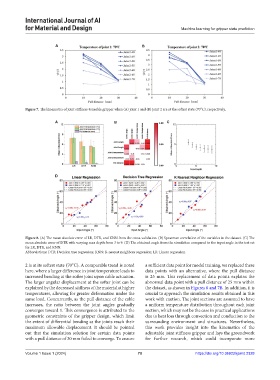
            Figure 7. The kinematics of joint stiffness-tuneable gripper when (A) joint 1 and (B) joint 2 are at the softest state (70°C), respectively.


                         A                        B                     C


                        D


            Figure 8. (A) The mean absolute error of LR, DTR, and KNN from the cross-validation. (B) Spearman correlation of the variables in the dataset. (C) The
            mean absolute error of DTR with varying max depth from 3 to 9. (D) The obtained angle from the simulation compared to the input angle in the test set
            for LR, DTR, and KNN.
            Abbreviations: DTR: Decision tree regression; KNN: K-nearest neighbors regression; LR: Linear regression.


            2 is at its softest state (70°C). A comparable trend is noted   a sufficient data point for model training, we replaced these
            here, where a larger difference in joint temperature leads to   data points with an alternative, where the pull distance
            increased bending at the softer joint upon cable actuation.   is 25  mm. This replacement of data points explains the
            The larger angular displacement at the softer joint can be   abnormal data point with a pull distance of 25 mm within
            explained by the decreased stiffness of the material at higher   the dataset, as shown in Figures 6 and 7B. In addition, it is
            temperatures, allowing for greater deformation under the   crucial to approach the simulation results obtained in this
            same load. Concurrently, as the pull distance of the cable   work with caution. The joint sections are assumed to have
            increases, the ratio between the joint angles gradually   a uniform temperature distribution throughout each joint
            converges toward 1. This convergence is attributed to the   section, which may not be the case in practical applications
            geometric constraints of the gripper design, which limit   due to heat loss through convection and conduction to the
            the extent of differential bending as the joints reach their   surrounding environment and structures. Nevertheless,
            maximum allowable displacement. It should be pointed   this work provides insight into the kinematics of the
            out that the simulation solution for certain data points   adjustable joint stiffness gripper and lays the groundwork
            with a pull distance of 30 mm failed to converge. To ensure   for further research, which could incorporate more


            Volume 1 Issue 1 (2024)                         70                      https://doi.org/10.36922/ijamd.2328

