


Page 74 - IJAMD-1-1
P. 74
International Journal of AI
            for Material and Design                                           Machine learning for gripper state prediction


                                                               Table 2. Summary of the parameters used in the simulation
                                                               for the development of the dataset
                                                               Parameters                          Values
                                                               Pull distance (mm)                 10, 20, 30
                                                               Temperature of joint 1 (°C)    40, 45, 50, 55, 60, 65, 70
                                                               Temperature of joint 2 (°C)    40, 45, 50, 55, 60, 65, 70
                                                               Total data points                    147


                                                                 The selection of these three machine learning techniques
                                                               aims to encompass a spectrum of data complexities – from
            Figure 4. The face on the opposite side of the knot, where boundary
            conditions are applied (highlighted in green as area “A” and red as   linear to non-linear relationships – ensuring the robustness
            area “B”).                                         of the predictive model. Each algorithm contributes to a
                                                               comprehensive understanding of the gripper’s behavior,
                                                               enhancing prediction accuracy and minimizing the reliance
                                                               on computationally intensive numerical simulations. The
                                                               collective use of these algorithms enables the identification
                                                               of the most effective approach for this specific application,
                                                               leading to an optimized control strategy for the soft robotic
                                                               gripper. A  brief explanation of the models and the tuning
                                                               parameters used are explained in Section 2.4.1 – Section 2.4.3.
                                                               2.4.1. Linear regression model
                                                               The LR technique was chosen for its simplicity and
                                                               interpretability. LR is well suited for identifying and
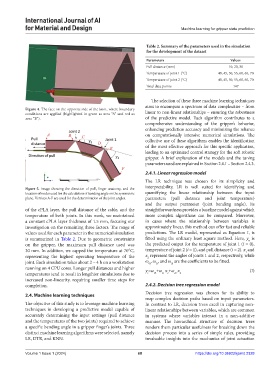
            Figure 5. Image showing the direction of pull, finger anatomy, and the
            location of nodes used for the calculation of bending angle on the symmetric   quantifying the linear relationship between the input
            plane. Vertices A-F are used for the determination of the joint angles.  parameters  (pull  distance  and  joint  temperature)
                                                               and the  output parameter (joint bending angle). Its
            of the cPLA layer, the pull distance of the cable, and the   straightforwardness provides a baseline model against which
            temperature of both joints. In this work, we maintained   more  complex  algorithms  can  be  compared. Moreover,
            a constant cPLA layer thickness of 1.5 mm, focusing our   in cases where the relationship between variables is
            investigation on the remaining three factors. The range of   approximately linear, this method can offer fast and reliable
            values used for each parameter in the numerical simulation   predictions. The LR model, represented as Equation I, is
            is summarized in  Table 2. Due to geometric constraints   fitted using the ordinary least square method. Here, y  is
                                                                                                           n
            on the gripper, the maximum pull distance used was   the predicted output for the temperature of joint 1 (i = 0),
            30 mm. In addition, we capped the temperature at 70°C,   temperature of joint 2 (i = 1), and pull distance (i = 2). x  and
                                                                                                         1
            representing the highest operating temperature of the   x  represent the angles of joints 1 and 2, respectively, while
                                                                2
            joint. Each simulation takes about 2 – 4 h on a workstation   ω , ω , and ω  are the coefficients to be fitted.
                                                                0i
                                                                   1i
                                                                          2i
            running on 4 CPU cores. Longer pull distances and higher   y =ω +ω  x +ω  x                    (I)
            temperatures tend to result in lengthier simulations due to   i  0i  1i  1  2i  2
            increased non-linearity, requiring smaller time steps  for
            completion.                                        2.4.2. Decision tree regression model
            2.4. Machine learning techniques                   Decision tree regression was chosen for its ability to
                                                               map complex decision paths based on input parameters.
            The objective of this study is to leverage machine learning   In contrast to LR, decision trees excel in capturing non-
            techniques in developing a predictive model capable of   linear relationships between variables, which are common
            accurately determining the input settings (pull distance   in  systems  where  variables  interact  in  a  non-additive
            and the temperatures of the two joints) required to achieve   manner. The hierarchical structure of decision trees
            a specific bending angle in a gripper finger’s joints. Three   renders them particular usefulness for breaking down the
            distinct machine learning algorithms were selected, namely   decision  process  into  a series  of  simple  rules,  providing
            LR, DTR, and KNN.                                  invaluable insights into the mechanics of joint actuation


            Volume 1 Issue 1 (2024)                         68                      https://doi.org/10.36922/ijamd.2328

