


Page 59 - IJAMD-1-3
P. 59
International Journal of AI for
            Materials and Design
                                                            Phase change materials and digital twin technology in thermal energy


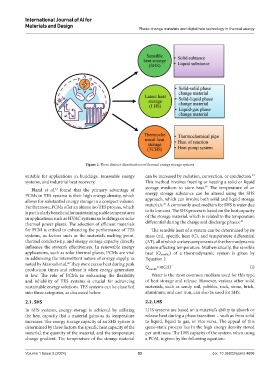
                                     Figure 2. Three distinct classifications of thermal energy storage systems

                                                                                                            44
            suitable  for  applications in  buildings,  renewable  energy   can be increased by radiation, convection, or conduction.
            systems, and industrial heat recovery.             This method involves freezing or heating a solid or liquid
                                                                                        45
              Bland  et al.  found that the primary advantage of   storage medium to store heat.  The temperature of an
                        42
            PCMs in TES systems is their high energy density, which   energy storage substance can be altered using the SHS
            allows for substantial energy storage in a compact volume.   approach, which can involve both solid and liquid storage
                                                                       46
            Furthermore, PCMs offer an almost iso TES process, which   materials.  A commonly used medium for SHS is water due
            is particularly beneficial for maintaining stable temperatures   to its low cost. The SHS process is based on the heat capacity
            in applications such as HVAC systems in buildings or solar   of the storage material, which is related to the temperature
            thermal power plants. The selection of efficient materials   differential during the charge and discharge phases. 45
            for PCM is critical to enhancing the performance of TES   The sensible heat of a system can be determined by its
            systems, as factors such as the material’s melting point,   mass (m), specific heat (C), and temperature differential
            thermal conductivity, and energy storage capacity directly   (ΔT), all of which are key components of the thermodynamic
            influence the system’s effectiveness. In renewable energy   system affecting temperature. Mathematically, the sensible
            applications, such as solar thermal plants, PCMs are vital   heat (Q sensible) of a thermodynamic system is given by
            in addressing the intermittent nature of energy supply, as   Equation I:
            noted by Masood et al.  They store excess heat during peak
                              43
            production times and release it when energy generation   Q sensible =mC∆T                      (I)
            is low. The role of PCMs in enhancing the flexibility   Water is the most common medium used for this type
            and reliability of TES systems is crucial for advancing   of heat storage and release. However, various other solid
            sustainable energy solutions. TES systems can be classified   materials, such as sandy soil, pebbles, rock, stone, brick,
            into three categories, as discussed below.         aluminum, and cast iron, can also be used for SHS.
            2.1. SHS                                           2.2. LHS

            In SHS systems, energy storage is achieved by utilizing   LHS systems are based on a material’s ability to absorb or
            the heat capacity that a material gains as its temperature   release heat during a phase transition – such as from solid
            increases. The energy storage capacity of an SHS system is   to liquid, liquid to gas, or vice-versa. The appeal of this
            determined by three factors: the specific heat capacity of the   quasi-static process lies in the high energy density stored
            material, the quantity of the material, and the temperature   per unit mass. The LHS capacity of the system, when using
            change gradient. The temperature of the storage material   a PCM, is given by the following equation:


            Volume 1 Issue 3 (2024)                         53                             doi: 10.36922/ijamd.4696

