


Page 61 - IJAMD-1-3
P. 61
International Journal of AI for
            Materials and Design
                                                            Phase change materials and digital twin technology in thermal energy


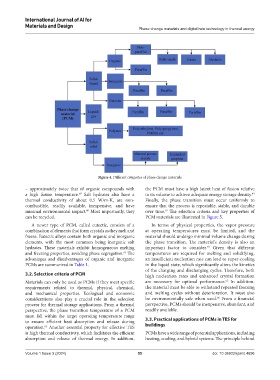
                                           Figure 4. Different categories of phase change materials

            – approximately twice that of organic compounds with   the PCM must have a high latent heat of fusion relative
                                                                                                            64
            a high fusion temperature.  Salt hydrates also have a   to its volume to achieve adequate energy storage density.
                                   59
            thermal conductivity of about 0.5  W/m-K, are non-  Finally, the phase transition must occur uniformly to
            combustible, readily available, inexpensive, and have   ensure that the process is repeatable, stable, and durable
                                                                       15
            minimal environmental impact.  Most importantly, they   over time.  The selection criteria and key properties of
                                      60
            can be recycled.                                   PCM materials are illustrated in Figure 5.
              A newer type of PCM,  called  eutectic,  consists of a   In terms of physical properties, the vapor pressure
            combination of elements that form crystals as they melt and   at operating temperatures must be limited, and the
            freeze. Eutectic alloys contain both organic and inorganic   material should undergo minimal volume change during
            elements, with the most common being inorganic salt   the phase transition. The material’s density is also an
            hydrates. These materials exhibit homogeneous melting   important factor to consider.  Given that different
                                                                                         64
            and freezing properties, avoiding phase segregation.  The   temperatures are required for melting and solidifying,
                                                      61
            advantages  and  disadvantages  of  organic  and  inorganic   an insufficient nucleation rate can lead to super-cooling
            PCMs are summarized in Table 1.                    in the liquid state, which significantly alters the kinetics
                                                               of the charging and discharging cycles. Therefore, both
            3.2. Selection criteria of PCM                     high  nucleation rates  and enhanced crystal formation
            Materials can only be used as PCMs if they meet specific   are necessary for optimal performance.  In addition,
                                                                                                 65
            requirements related to thermal, physical, chemical,   the material must be able to withstand repeated freezing
            and mechanical properties. Ecological and economic   and melting cycles without deterioration. It must also
                                                                                             66
            considerations also play a crucial role in the selection   be environmentally safe when used.  From a financial
            process for thermal storage applications. From a thermal   perspective, PCMs should be inexpensive, abundant, and
            perspective,  the  phase  transition  temperature  of  a  PCM   readily available.
            must fall within the target operating temperature range
            to  ensure  efficient  heat  absorption  and  release  during   3.3. Practical applications of PCMs in TES for
            operation.  Another essential property for effective TES   buildings
                    63
            is high thermal conductivity, which facilitates the efficient   PCMs have a wide range of potential applications, including
            absorption  and  release  of  thermal  energy.  In  addition,   heating, cooling, and hybrid systems. The principle behind


            Volume 1 Issue 3 (2024)                         55                             doi: 10.36922/ijamd.4696

