


Page 566 - IJB-10-2
P. 566
International Journal of Bioprinting                              OLS design for distal femur osseointegration


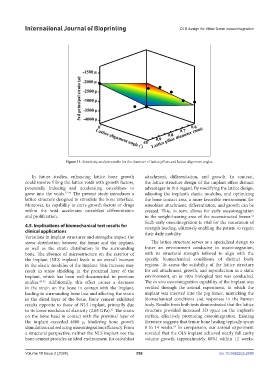
                             Figure 11. Sensitivity analysis results for the diameter of lattice pillars and lattice alignment angles.


               In future studies, enhancing lattice bone growth   attachment, differentiation, and growth. In contrast,
            could involve filling the lattice voids with growth factors,   the lattice structure design of the implant offers distinct
            potentially  inducing  and  accelerating  osteoblasts  to   advantages in this regard. By modifying the lattice design,
            grow into the voids. 57-60  The present study introduces a   adjusting the implant’s elastic modulus, and optimizing
            lattice structure designed to stimulate the bone interface.   the bone contact area, a more favorable environment for
            Moreover, its capability to carry growth factors or drugs   osteoblast attachment, differentiation, and growth can be
            within the void accelerates osteoblast differentiation   created. This, in turn, allows for early osseointegration
            and proliferation.                                 in the weight-bearing area of the reconstructed femur.
                                                                                                            62
                                                               Such early osseointegration is vital for the restoration of
            4.5. Implications of biomechanical test results for   strength loading, ultimately enabling the patient to regain
            clinical applications                              their daily mobility.
            Variations in implant structures and strengths impact the
            stress distribution between the femur and the implant,   The lattice structure serves as a specialized design to
            as well as the strain distribution in the surrounding   foster an environment conducive to osseointegration,
            bone. The absence of microstructure on the exterior of   with its structural strength tailored to align with the
            the implant (NLS implant) leads to an overall increase   specific biomechanical conditions of distinct body
            in the elastic modulus of the implant. This increase may   regions. To assess the suitability of the lattice structure
            result in stress shielding in the proximal layer of the   for cell attachment, growth, and reproduction in a static
            implant, which has been well-documented in previous   environment,  an  in vitro  biological  test  was  conducted.
            studies. 49-52  Additionally, this effect causes a decrease   The in vivo osseointegration capability of the implant was
            in the strain on the bone in contact with the implant,   verified through the animal experiment, in which the
            leading to surrounding bone loss and affecting the strain   implant was inserted into the pig femur, mimicking the
            in the distal layer of the bone. Bone cement exhibited   biomechanical conditions and responses in the human
            results opposite to those of NLS implant, primarily due   body. Results from both tests demonstrated that the lattice
            to its lower modulus of elasticity (2.65 GPa).  The strain   structure provided increased 3D space on the implant’s
                                                61
            on the bone head in contact with the proximal layer of   surface, effectively  promoting osseointegration. Existing
            the implant exceeded 4000 μ, hindering bone growth   literature suggests that femur bone healing typically spans
            stimulation and reducing osseointegration efficiency. From   8 to 14 weeks.  In comparison, our animal experiment
                                                                           63
            a structural perspective, neither the NLS implant nor the   revealed that the OLS implant achieved nearly full cavity
            bone cement provides an ideal environment for osteoblast   volume growth (approximately 80%) within 12 weeks.


            Volume 10 Issue 2 (2024)                       558                                doi: 10.36922/ijb.2590

