


Page 562 - IJB-10-2
P. 562
International Journal of Bioprinting                              OLS design for distal femur osseointegration


            the efficacy of the lattice design in guiding bone growth   of loading. While walking, the hip bears an average load
            and achieving favorable osseointegration. Conversely, the   of 238% of body weight.  In a sitting position, the lumbar
                                                                                  46
            solid implants, characterized by the non-porous structure,   spine undergoes a pressure load of approximately 1698
                                                                                                            47
            restricted immature bone growth to the external periphery   N, contrasting with 1076 N in a standing position.
            of the implant, impeding penetration into the implant itself.   Throughout the gait cycle, the tibial and ankle regions
            This limitation significantly compromised the implant’s   can  bear loads up  to 3.5  times  the body  weight.  The
                                                                                                        48
            ability to integrate with the surrounding bone. Notably, the   craniofacial region frequently experiences masticatory
                                                                                                            29
            volume of immature bone within the OLS surpassed the   forces, with molars bearing a load of around 250 N.
            original implant cavity volume. This observation suggests   Comparing the loads in each area reveals significant
            that immature bone smoothly grows not only into the   differences, emphasizing the necessity to design implant
            lattice structure but also along the implant’s periphery.   lattices  differently  to  accommodate  various  loading
            The immature bone effectively encompasses the implant,   conditions and expedite implant osseointegration.
            thereby augmenting  the implant’s osseointegration   4.2. Correlation between lattice structure
            capability (Table 4).                              parameters and material properties
                                                               From a microcosmic perspective, it is essential for the lattice
            4. Discussion                                      structure on the implant surface to possess an appropriate
            4.1. Optimal lattice structure design for implants in   elastic modulus and favorable osteoconductive properties
            distal femur mechanical conditions                 to facilitate bone growth into it. A crucial design criterion
            From a macroscopic perspective, it is crucial to examine   for distal femur defect reconstruction implant is selecting
            the implant’s structure to ensure its capability to withstand   lattice structure parameters whose elastic modulus aligned
                                                                               10
            the body’s weight and the daily-life force loading, such as   that of nature bone,  while avoiding the stress shielding
            those during walking, without suffering damage. In this   effect. 49-52  Upon further exploration of the relationship
            study, the implant structure was designed to be hollow, with   between lattice pillar diameter and material properties
            a thickness of 2 mm. The primary objective of this design   (Figure 8), it becomes evident that the bone strain around
            was to allow for potential future incorporation of growth   the lattice increases as the pillar diameter increases. The
            factors known to enhance osteoconductive properties. 43,44    elastic modulus of the lattice shows significant growth as
            The 2 mm thickness for the implant was based on relevant   the pillar diameter increases, up to 0.9 mm, reaching elastic
            literature, which suggests that such a design could maintain   moduli of 14.99 GPa and 15.88 GPa. However, this leads to
                                                               strains on the surrounding bones exceeding 4000 μ.  To
                                                                                                         17
            adequate mechanical strength. 45
                                                               prevent the lattice from having an excessively high elastic
               Various structures, positions, and movement patterns   modulus, it is essential to avoid selecting a pillar diameter
            within the body experience varying forms and magnitudes   above  0.9  mm.  The  excessive  modulus  could  adversely


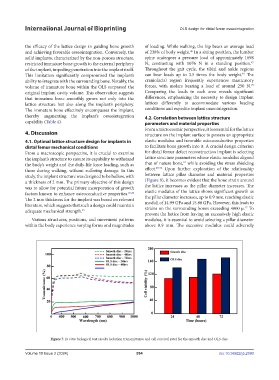
                       Figure 7. In vitro biological test results (solution transmittance and cell survival rate) for the smooth disc and OLS disc.


            Volume 10 Issue 2 (2024)                       554                                doi: 10.36922/ijb.2590

