


Page 564 - IJB-10-2
P. 564
International Journal of Bioprinting                              OLS design for distal femur osseointegration


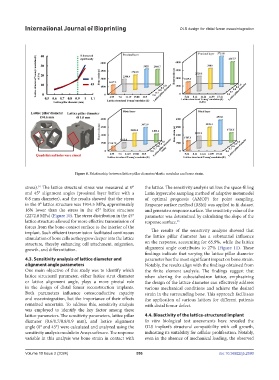
                                 Figure 8. Relationship between lattice pillar diameter/elastic modulus and bone strain.


                 54
            stress).  The lattice structural stress was measured at 0°   the lattice. The sensitivity analysis utilizes the space-filling
            and 45° alignment angles (proximal layer lattice with a   Latin hypercube sampling method of adaptive metamodel
            0.8 mm diameter), and the results showed that the stress   of optimal prognosis (AMOP) for point sampling.
            in the 0° lattice structure was 1954.5 MPa, approximately   Response surface method (RSM) was applied to fit dataset
            16% lower than the stress in the 45° lattice structure   and generate a response surface. The sensitivity value of the
            (2272.8 MPa) (Figure 10). The stress distribution in the 45°   parameter was determined by calculating the slope of the
            lattice structure allowed for more effective transmission of   response surface. 55
            forces from the bone-contact surface to the interior of the
            implant. Such efficient transmission facilitated continuous   The results of the sensitivity analysis showed that
            stimulation of bone cells as they grew deeper into the lattice   the lattice pillar diameter has a substantial influence
            structure, thereby enhancing cell attachment, migration,   on the response, accounting for 65.9%, while the lattice
            growth, and differentiation.                       alignment angle contributes to 27% (Figure 11). These
                                                               findings indicate that varying the lattice pillar diameter
            4.3. Sensitivity analysis of lattice diameter and   parameter has the most significant impact on bone strain.
            alignment angle parameters                         Notably, the results align with the findings obtained from
            One main objective of this study was to identify which   the finite element analysis. The findings suggest that
            lattice structural parameter, either lattice strut diameter   when altering the cuboctahedron lattice, emphasizing
            or lattice alignment angle, plays a more pivotal role   the design of the lattice diameter can effectively address
            in the design of distal femur reconstruction implants.   various  mechanical conditions  and achieve  the  desired
            Both parameters influence osteoconductive capacity   strain in the surrounding bone. This approach facilitates
            and osseointegration, but the importance of their effects   the  application  of  various  lattices  for  different  patients
            remained uncertain. To address this, sensitivity analysis   with distal femur defect.
            was  employed  to  identify  the  key  factor  among  these
            lattice parameters. The sensitivity parameters, lattice pillar   4.4. Bioactivity of the lattice-structured implant
            diameter (0.6/0.7/0.8/0.9 mm), and lattice alignment   In vitro biological test assessments have revealed the
            angle (0° and 45°) were calculated and analyzed using the   OLS implant’s structural compatibility with cell growth,
            sensitivity analysis module in Ansys software. The response   indicating its suitability for cellular proliferation. Notably,
            variable in this analysis was bone strain in contact with   even in the absence of mechanical loading, the observed


            Volume 10 Issue 2 (2024)                       556                                doi: 10.36922/ijb.2590

