


Page 214 - IJB-9-1
P. 214
International Journal of Bioprinting                                 FeS /PCL scaffold for bone regeneration
                                                                                    2


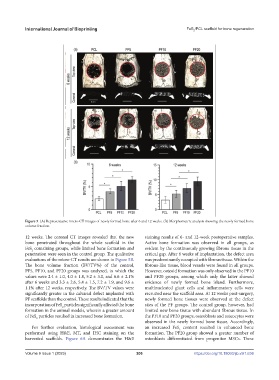
            Figure 5. (A) Representative micro-CT images of newly formed bone after 6 and 12 weeks. (B) Morphometric analysis showing the newly formed bone
            volume fraction.

            12 weeks. The coronal CT images revealed that the new   staining results of 6- and 12-week postoperative samples.
            bone penetrated throughout the whole scaffold in the   Active bone formation was observed in all groups, as
            FeS  containing groups, while limited bone formation and   evident by the continuously growing fibrous tissue in the
               2
            penetration were seen in the control group. The qualitative   critical gap. After 6 weeks of implantation, the defect area
            evaluations of the micro-CT results are shown in Figure 5B.   was predominantly occupied with fibrous tissue. Within the
            The bone volume  fraction (BV/TV%) of the control,   fibrous-like tissue, blood vessels were found in all groups.
            PF5, PF10, and PF20 groups was analyzed, in which the   However, osteoid formation was only observed in the PF10
            values were 2.4 ± 1.0, 4.0 ± 1.8, 5.2 ± 3.0, and 6.6 ± 2.1%   and PF20 groups, among which only the latter showed
            after 6 weeks and 3.3 ± 2.6, 5.4 ± 1.5, 7.2 ± 1.9, and 9.6 ±   evidence of newly formed bone island. Furthermore,
            1.1% after 12 weeks, respectively. The BV/TV values were   multinucleated  giant  cells  and inflammatory cells were
            significantly greater in the calvarial defect implanted with   recruited near the scaffold area. At 12 weeks post-surgery,
            PF scaffolds than the control. These results indicated that the   newly formed bone tissues were observed at the defect
            incorporation of FeS  particles significantly affected the bone   sites of the PF groups. The control group, however, had
                            2
            formation in the animal models, wherein a greater amount   limited new bone tissue with abundant fibrous tissue. In
            of FeS  particles resulted in increased bone formation.  the PF10 and PF20 groups, osteoblasts and osteocytes were
                 2
                                                               observed in the newly formed bone tissue. Accordingly,
               For further evaluation, histological assessment was   an increased FeS  content resulted in enhanced bone
                                                                             2
            performed using H&E, MT, and IHC staining on the   formation. The PF20 group showed a greater number of
            harvested scaffolds.  Figure 6A demonstrates the H&E   osteoblasts differentiated from progenitor MSCs. These


            Volume 9 Issue 1 (2023)olume 9 Issue 1 (2023)
            V                                              206                      https://doi.org/10.18063/ijb.v9i1.636

