


Page 113 - IJB-9-6
P. 113
International Journal of Bioprinting                              Affordable temperature-controlled bioprinter


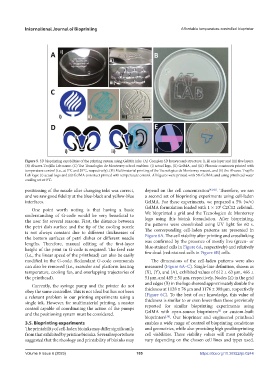
            Figure 5. 3D bioprinting capabilities of the printing system using GelMA inks. (A) Complex 3D honeycomb structure: (i, ii) one layer and (iii) five layers.
            (B) Alvarez-Trujillo Lab name. (C) The Tecnologico de Monterrey school emblem: (i) actual logo, (ii) GelMA, and (iii) Pluronic constructs printed with
            temperature control (i.e., at 5°C and 35°C, respectively). (D) Multimaterial printing of the Tecnologico de Monterrey mascot, and (E) the Alvarez-Trujillo
            Lab logo: (i) actual logo and (ii) GelMA construct printed with temperature control. All figures were printed with 5% GelMA; and using printhead water
            cooling set at 0°C.

            positioning of the nozzle after changing inks was correct,   depend on the cell concentration [41,42] . Therefore, we ran
            and we saw good fidelity at the blue-black and yellow-blue   a second set of bioprinting experiments using cell-laden
            interfaces.                                        GelMA. For these experiments, we prepared a 5% (w/v)
                                                                                               6
               One point worth noting is that having a basic   GelMA formulation loaded with 1 × 10  C2C12 cells/mL.
            understanding of G-code would be very beneficial to   We bioprinted a grid and the Tecnologico de Monterrey
            the user for several reasons. First, the distance between   logo using this bioink formulation. After bioprinting,
            the petri dish surface and the tip of the cooling nozzle   the patterns were crosslinked using UV light for 60 s.
            is not always constant due to different thicknesses of   The corresponding cell-laden patterns are presented in
            the  bottom surfaces  of petri  dishes or  different needle   Figure 6A. The cell viability after printing and crosslinking
            lengths. Therefore, manual editing of the first-layer   was confirmed by the presence of mostly live (green- or
            height of the print in G-code is required. The feed rate   blue-stained cells in Figure 6A, respectively) and relatively
            (i.e., the linear speed of the printhead) can also be easily   few dead (red-stained cells in Figure 6B) cells.
            modified in the G-code. Redundant G-code commands     The  dimensions  of  the  cell-laden  patterns  were  also
            can also be removed (i.e., extruder and platform heating   measured (Figure 6A–C). Single-line definition, shown as
            temperature, cooling fan, and overlapping trajectories of   (X), (Y), and (A), exhibited values of 612 ± 63 µm, 466 ±
            the printhead).                                    51 µm, and 485 ± 51 µm, respectively. Nodes (Z) in the grid
               Currently, the  syringe pump and  the  printer  do  not   and edges (B) in the logo showed approximately double the
            obey the same controller. This is not ideal but has not been   thickness at 1128 ± 76 µm and 1176 ± 308 µm, respectively
            a relevant problem in our printing experiments using a   (Figure 6C). To the best of our knowledge, this value of
            single ink. However, for multimaterial printing, a master   thickness is similar to or even lower than those previously
            control capable of coordinating the action of the pumps   reported for similar bioprinting experiments using
                                                                                              [2]
            and the positioning system must be considered.     GelMA with open-source bioprinters  or custom-built
                                                                        [34]
                                                               bioprinters . Our bioprinter and engineered printhead
            3.5. Bioprinting experiments                       enables a wide range of control of bioprinting conditions
            The printability of cell-laden bioinks may differ significantly   and geometries, while also providing high postbioprinting
            from that exhibited by pristine bioinks. Several reports have   cell viabilities. These viability values will most probably
            suggested that the rheology and printability of bioinks may   vary depending on the chosen cell lines and types used.

            Volume 9 Issue 6 (2023)                        105                        https://doi.org/10.36922/ijb.0244

