


Page 182 - IJB-9-6
P. 182
International Journal of Bioprinting                   3D-printed assembly anatomical patella fracture bone plate


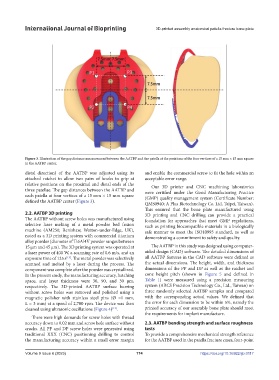
            Figure 3. Illustration of the gap distance measurement between the AATBP and the patella at the positions of the four vertices of a 15 mm × 15 mm square
            in the AATBP center.
            distal direction) of the AATBP was adjusted using its   and enable the commercial screw to fit the hole within an
            attached ratchet to allow two pairs of hooks to grip at   acceptable error range.
            relative positions on the proximal and distal ends of the   Our 3D printer and CNC machining laboratories
            three patellae. The gap distances between the AATBP and   were certified under the Good Manufacturing Practice
            each patella at four vertices of a 15 mm × 15 mm square   (GMP) quality management system (Certificate Number:
            defined the AATBP center (Figure 3).               QMS0940; A Plus Biotechnology Co. Ltd, Taipei, Taiwan).
                                                               This ensured that the bone plate manufactured using
            2.2. AATBP 3D printing                             3D printing and CNC drilling can provide a practical
            The AATBP without screw holes was manufactured using   foundation for approaches that meet GMP regulations,
            selective laser melting of a metal powder bed fusion   such as printing biocompatible materials in a biologically
            machine (AM250; Renishaw, Wotton-under-Edge, UK),   safe manner to meet the ISO10993 standard, as well as
            noted as a 3D printing system with commercial titanium   demonstrating a commitment to safety and quality.
            alloy powder (diameter of Ti6Al4V powder ranges between
            15 μm and 45 μm). The 3D printing system was operated at   The AATBP in this study was designed using computer-
            a laser power of 400 W, a scanning rate of 0.6 m/s, and an   aided design (CAD) software. The detailed dimensions of
            exposure time of 125 s . The metal powder was selectively   all AATBP features in the CAD software were defined as
                             [13]
            scanned and melted by a laser during the process. The   the actual dimensions. The height, width, and thickness
            component was complete after the powder was crystallized.   dimensions of the PP and DP as well as the ratchet and
            In the present study, the manufacturing accuracy, hatching   cone height pitch (shown in  Figure 5 and defined in
            space,  and  layer  thickness  were  30,  90,  and  30  μm,   Table  1) were measured using a precision measuring
            respectively. The 3D-printed AATBP surface burring   system (ARCS Precision Technology Co., Ltd., Taiwan) on
            without  screw  holes  was  removed and  polished using a   three randomly selected AATBP samples and compared
            magnetic polisher with stainless steel pins (Ø =1  mm,    with the corresponding actual values. We defined that
            L = 3 mm) at a speed of 2,700 rpm. The device was then   the error for each dimension to be within 5%, namely the
            cleaned using ultrasonic oscillations (Figure 4) .  printed accuracy of our assembly bone plate should meet
                                                 [13]
                                                               the requirements for implant manufacture.
               There were high demands for screw holes with thread
            accuracy down to 0.02 mm and screw hole surface without   2.3. AATBP bending strength and surface roughness
            cracks. All PP and DP screw holes were generated using   tests
            traditional XXX (CNC) positioning drilling to control   To provide a comprehensive mechanical strength reference
            the manufacturing accuracy within a small error margin   for the AATBP used in the patella fracture cases, four-point

            Volume 9 Issue 6 (2023)                        174                         https://doi.org/10.36922/ijb.0117

