


Page 184 - IJB-9-6
P. 184
International Journal of Bioprinting                   3D-printed assembly anatomical patella fracture bone plate


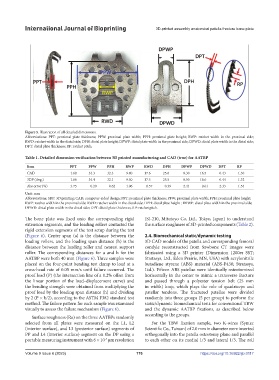
            Figure 5. Illustration of all detailed dimensions.
            Abbreviations: PPT: proximal plate thickness; PPW: proximal plate width; PPH: proximal plate height; RWP: ratchet width in the proximal side;
            RWD: ratchet width in the distal side; DPH: distal plate height; DPWP: distal plate width in the proximal side; DPWD: distal plate width in the distal side;
            DPT: distal plate thickness; RP: ratchet pitch.

            Table 1. Detailed dimension verification between 3D printed manufacturing and CAD (true) for AATBP

             Item              PPT     PPW     PPH     RWP     RWD    DPH     DPWP    DPWD    DPT     RP
             CAD               1.60    34.3    32.3    9.40    17.6    25.6    8.30   16.5     0.43    1.30
             3DP (Avg.)        1.66    34.4    32.1    9.50    17.5    25.5    8.50   16.6     0.44    1.32
             Abs error (%)     3.75     0.29    0.62   1.06    0.57    0.39    2.41    0.61    2.33    1.54
            Unit: mm
            Abbreviations: 3DP: 3D printing; CAD: computer-aided design; PPT: proximal plate thickness; PPW: proximal plate width; PPH: proximal plate height;
            RWP: ratchet width in the proximal side; RWD: ratchet width in the distal side; DPH: distal plate height ; DPWP: distal plate width in the proximal side;
            DPWD: distal plate width in the distal side; DPT: distal plate thickness; RP: ratchet pitch.

            The  bone  plate  was  fixed  onto  the  corresponding  rigid   (SJ-210, Mitutoyo Co, Ltd., Tokyo, Japan) to understand
            extension segments, and the loading rollers contacted the   the surface roughness of 3D-printed components (Table 2).
            rigid extension segments of the test setup during the test
            (Figure 6). Center span (a) is the distance between the   2.4. Biomechanical static/dynamic testing
            loading rollers, and the loading span distance (h) is the   3D CAD models of the patella and corresponding femoral
            distance between the loading roller and nearest support   condyle  reconstructed  from Sawbone CT  images  were
            roller. The corresponding distances for a and h for the   fabricated using a 3D printer (Dimension 1200es SST;
            AATBP were both 40 mm (Figure 6). Three samples were   Stratasys, Ltd., Eden Prairie, MN, USA) with acrylonitrile
            placed on the four-point bending test clamp to load at a   butadiene styrene (ABS) material (ABS-P430; Stratasys,
            cross-head rate of 0.05 mm/s until failure occurred. The   Ltd.). Fifteen ABS patellae were identically osteotomized
            proof load (P) (the intersection line of a 0.2% offset from   horizontally in the center to mimic a transverse fracture
            the linear portion of the load–displacement curve) and   and passed through a polyester tension belt (25 mm
            the bending strength were obtained from multiplying the   in width) loop, which plays the role of quadriceps and
            proof load by the loading span distance (h) and dividing   patellar tendons. The fractured patellae were divided
            by 2 (P × h/2), according to the ASTM F382 standard test   randomly into three groups (5 per group) to perform the
            method. The failure pattern for each sample was examined   static/dynamic biomechanical tests for conventional TBW
            visually to assess the failure mechanism (Figure 6).  and  the  dynamic  AATBP  fixations,  as  described  below
                                                               according to the groups.
               Surface roughness (Ra) on the three AATBPs randomly
            selected from all plates were measured on the L1, L2   For the TBW fixation sample, two K-wires (Syntec
            (interior surface), and L3 (posterior surface) segments of   Scientific Co., Taiwan) of 2.0 mm in diameter were inserted
            PP and L4 (interior surface) segment on the DP using a   orthogonally into the patella osteotomy plane and parallel
            portable measuring instrument with 6 × 10  µm resolution   to each other on its medial 1/3 and lateral 1/3. The roll
                                              -3
            Volume 9 Issue 6 (2023)                        176                         https://doi.org/10.36922/ijb.0117

