


Page 340 - IJB-9-6
P. 340
International Journal of Bioprinting                                   3D printing and bioprinting in urology


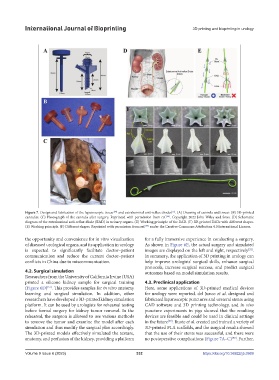
            Figure 7. Design and fabrication of the laparoscopic trocar  and extraluminal anti-reflux diodes . (A) Drawing of cannula and trocar. (B) 3D-printed
                                                  [90]
                                                                          [55]
            cannulas. (C) Photograph of the cannula after surgery. Reprinted with permission from ref. . Copyright 2022 John Wiley and Sons. (D) Schematic
                                                                        [90]
            diagram of the extraluminal anti-reflux diode (EAD) in urinary organs. (E) Working principle of the EAD. (F) 3D-printed EADs with different shapes.
            (E) Working principle. (F) Different shapes. Reprinted with permission from ref.  under the Creative Commons Attribution 4.0 International License.
                                                               [55]
            the opportunity and convenience for in vitro visualization   for a fully immersive experience in conducting a surgery.
            of diseased urological organs, and its application in urology   As shown in Figure 6E, the actual surgery and simulated
            is expected to significantly facilitate doctor–patient   images are displayed on the left and right, respectively .
                                                                                                           [52]
            communication and reduce the current doctor–patient   In summary, the application of 3D printing in urology can
            conflicts in China due to miscommunication.        help  improve urologists’ surgical  skills, enhance  surgical
                                                               protocols, increase surgical success, and predict surgical
            4.2. Surgical simulation                           outcomes based on model simulation results.
            Researchers from the University of California Irvine (USA)
            printed a silicone kidney sample for surgical training   4.3. Preclinical application
            (Figure 6D) . This provides samples for in vitro anatomy   Here, some applications of 3D-printed medical devices
                     [51]
            learning and surgical simulation. In addition, other   for urology were reported. del Junco et al. designed and
            researchers have developed a 3D-printed kidney simulation   fabricated laparoscopic punctures and ureteral stents using
            platform. It can be used by urologists for rehearsal testing   CAD software and 3D printing technology, and  in vivo
            before formal surgery for kidney tumor removal. In the   puncture experiments in pigs showed that the resulting
            rehearsal, the surgeon is allowed to use various methods   devices are feasible and could be used in clinical settings
            to remove the tumor and examine the model after each   in the future . Buote et al. created and trained a variety of
                                                                         [53]
            simulation and thus modify the surgical plan accordingly.   3D-printed PLA scaffolds, and the surgical results showed
            The 3D-printed models effectively simulated the texture,   that the use of their stents was successful, and there were
            anatomy, and perfusion of the kidney, providing a platform   no postoperative complications (Figure 7A–C) . Further,
                                                                                                    [90]

            Volume 9 Issue 6 (2023)                        332                          https://doi.org/10.36922/ijb.0969

