


Page 428 - IJB-9-6
P. 428
International Journal of Bioprinting                                Versatile pomelo peel-inspired structures


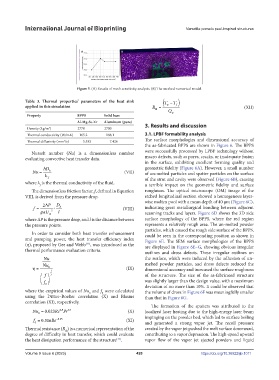
                                  Figure 5. (A) Results of mesh sensitivity analysis. (B) The meshed numerical model.

                                                                        w (
            Table 3. Thermal properties’ parameters of the heat sink   T − )
                                                                           T
            applied in this simulation                            R =    Q  f                            (XII)
                                                                   th
             Property             BPPS       Solid base                   w
                                  Al-Mg-Sc-Zr  Aluminum (pure)
             Density (kg/m )      2770        2700             3. Results and discussion
                      3
             Thermal conductivity (W/mK)  165.2  188.1         3.1. LPBF formability analysis
             Thermal diffusivity (mm /s)  5.533  7.426         The surface morphologies and dimensional accuracy of
                            2
                                                               the as-fabricated BPPS are shown in Figure 6. The BPPS
               Nusselt number (Nu) is a dimensionless number   were successfully processed by LPBF technology without
            evaluating convective heat transfer data.          macro defects, such as pores, cracks, or inadequate fusion
                                                               in the surface, exhibiting excellent forming quality and
                    hD                                         geometric fidelity (Figure 6A). However, a small number
               Nu =   h                               (VII)    of un-melted particles and spatter particles on the surface
                    λ
                      f                                        of the strut and cavity were observed (Figure 6B), causing
            where λ  is the thermal conductivity of the fluid.
                  f                                            a terrible impact on the geometric fidelity and surface
               The dimensionless friction factor, f, defined in Equation   roughness. The optical microscope (OM) image of the
            VIII, is derived from the pressure drop.           etched longitudinal section showed a homogenous layer-
                                                               wise molten pool with a mean depth of 40 μm (Figure 6C),
                   2Δ P  D
               f =      ⋅  h                         (VIII)    indicating  great  metallurgical  bonding  between  adjacent
                  ρ aU m 2  l                                  scanning tracks and layers. Figure 6D shows the 3D side
            where ΔP is the pressure drop, and l is the distance between   surface morphology of the BPPS, where the red region
            the pressure points.                               represents a relatively rough area. The un-melted powder
                                                               particles, which caused the rough side surface of the BPPS,
               In order to consider both heat transfer enhancement   could be seen in the corresponding position as shown in
            and  pumping  power,  the  heat  transfer  efficiency  index   Figure 6E. The SEM surface morphologies of the BPPS
            (η), proposed by Gee and Webb , was introduced as the   are displayed in Figure 6E–G, showing obvious irregular
                                      [43]
            thermal performance evaluation criteria.           outlines and dross defects. These irregular outlines on
                    Nu                                         the surface, which were induced by the adhesion of un-
                   Nu                                          melted  powder  particles,  and  dross  defects  reduced  the
               η=     0  1                             (IX)    dimensional accuracy and increased the surface roughness
                   f    3                                    of the structure. The size of the as-fabricated structure
                    f 0                                    was slightly larger than the design value, with a maximum
            where the empirical values of Nu  and f  were calculated   deviation of no more than 10%. It could be observed that
                                                               the volume of dross in Figure 6F was meaningfully smaller
                                       0
                                            0
            using  the  Dittus–Boelter  correlation  (X)  and Blasius   than that in Figure 6G.
            correlation (XI), respectively.
                                                                  The formation of the spatters was attributed to the
                           08.
               Nu =  0 023.  Re Pr 03.                  (X)    localized laser heating due to the high-energy laser beam
                 0
               f = 0 316.  Re − 025.                   (XI)    impinging on the powder bed, which led to surface boiling
                                                               and  generated a strong  vapor  jet.  The  recoil  pressure
                0
            Thermal resistance (R ) is a numerical representation of the   created by the vapor jet pushed the melt surface downward,
                             th
            degree of difficulty in heat transfer, which could evaluate   contributing to a vapor depression. The high-speed upward
            the heat dissipation performance of the structure .  vapor flow of the vapor jet ejected powders and liquid
                                                   [44]
            Volume 9 Issue 6 (2023)                        420                         https://doi.org/10.36922/ijb.1011

