


Page 541 - IJB-9-6
P. 541
International Journal of Bioprinting                  High-performance SrCS scaffolds via vat photopolymerization


            exhibited a limited number of micropores, suggesting a   about three times that of the pure scaffold. One of the
            lower degradation rate.                            reasons is that composite scaffolds lost components
               Particularly, the degradation rate of the SrCS-40BTA   more slowly in the degradation process, resulting in
            scaffold after soaking for 14 days was only 1.32 ± 0.09%,   more complete structures and fewer surface defects
            which was one-third that of the pure SrCS scaffold (shown   than the pure SrCS scaffold.  Another reason is that the
            in Figure 11a). Accordingly, as the structure was relatively   pinning effect played a crucial role in hindering the crack
            complete, the compressive strength of the composite   extension and grain movement during the compression
            scaffolds was also better than the pure SrCS scaffold after   process, and became more obvious with the increase
            degradation (shown in Figure 11b). Moreover, the SrCS-  of BTA content. Meanwhile, the elasticity modulus
            40BTA scaffold exhibited a few microcracks after soaking   of the scaffolds increased after  in vitro degradation
            for 4 days but was intercepted by the CaTiO  grains.   (shown in Figure 12d). According to previous reports,
                                                   3
            This pinning effect was one of the main reasons for the   an elastic modulus greater than 3.0 GPa would not
                                                                                                  [55]
            enhancement of mechanical properties, in consistent   be conducive to the growth of new bone  . Thus, we
            with the previous results.                         should adjust the content of BTA so that the composite
                                                               scaffolds have the required compressive strength while
               The degraded scaffolds were subjected to compression   maintaining the appropriate elasticity modulus. In vitro
            tests to evaluate their mechanical properties in operation   degradation experiment revealed that we can regulate
            (shown in Figure 12a). Figure 12b presents the stress–  the biodegradability of SrCS scaffolds by changing the
            strain curves of the scaffolds after in vitro degradation   content of BTA to provide the necessary mechanical
            for 14 days, and the curves of other days are shown in   support for the long-time regeneration of large
            Figure S4 (Supplementary File). These curves all showed   bone defects.
            that scaffolds doped with BTA still had high compressive
            strength after in vitro degradation, which ensured that   3.5. In vitro biological activity evaluation
            they could play a good supporting role in the process of   To verify the biological activity of the scaffolds, we tested
            bone repair. In addition, the greater energy absorption of   the OD values of cell proliferation by CCK-8 assay, as
            the composite scaffolds resulted in a strong deformation   shown in Figure 13. After culturing for 1 day, the OD values
            resistance.  Figure 12c shows the compressive strength   of SrCS composite scaffolds were similar to those of the
            of the degraded scaffolds. The compressive strength of   control group. After culturing for 7 days, all components
            the SrCS-40BTA scaffold after in vitro degradation was   of the cells had obvious proliferation effect, and the SrCS


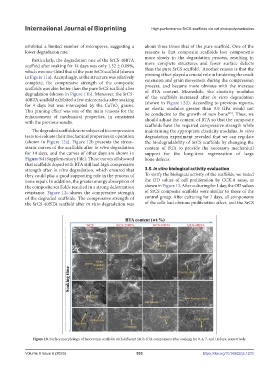
               Figure 10. Surface morphology of bioceramic scaffolds with different SrCS-BTA components after soaking for 0, 4, 7, and 14 days, respectively.


            Volume 9 Issue 6 (2023)                        533                          https://doi.org/10.36922/ijb.1233

