


Page 17 - IJOCTA-15-2
P. 17
M. Perala, S. Chandrasekaran, E. Begovic / IJOCTA, Vol.15, No.2, pp.202-214 (2025)
                                                              reaction, pushing the vessel’s position down to ap-
                                                              proximately 55 m by the end of the 300 s simula-
                                                              tion. This overcorrection acts as an impact load
                                                              on the structure, creating an undesirable situation
                                                              that’s potentially as problematic as the original
                                                              drift.
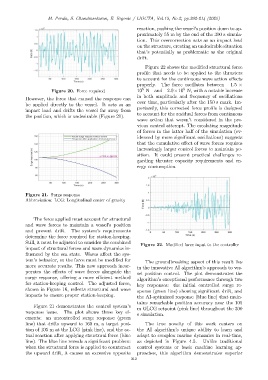
                                                                  Figure 22 shows the modified structural force
                                                              profile that needs to be applied to the thrusters
                                                              to account for the continuous wave action effects
                                                              properly.  The force oscillates between −1.5 ×
                                                                                  5
                                                                5
                        Figure 20. Force required             10 N    and  2.0×10 N, with a notable increase
                                                              in both amplitude and frequency of oscillations
            However, the force that caused the response can
            be applied directly to the vessel. It acts as an  over time, particularly after the 150 s mark. Im-
            impact load and drifts the vessel far away from   portantly, this corrected force profile is designed
            the position, which is undesirable (Figure 21).   to account for the residual forces from continuous
                                                              wave action that weren’t considered in the pre-
                                                              vious control attempt. The escalating magnitude
                                                              of forces in the latter half of the simulation (ev-
                                                              idenced by more significant oscillations) suggests
                                                              that the cumulative effect of wave forces requires
                                                              increasingly larger control forces to maintain po-
                                                              sition. It could present practical challenges re-
                                                              garding thruster capacity requirements and en-
                                                              ergy consumption.


            Figure 21. Surge response
            Abbreviation: LCG: Longitudinal center of gravity


                The force applied must account for structural
            and wave forces to maintain a vessel’s position
            and prevent drift.   The system’s requirements
            determine the force required for station-keeping.
            Still, it must be adjusted to consider the combined
                                                               Figure 22. Modified force input to the controller
            impact of structural forces and wave dynamics in-
            fluenced by the sea state. Waves affect the sys-
            tem’s behavior, so the force must be modified for
                                                                  The groundbreaking aspect of this result lies
            more accurate results. This new approach incor-
                                                              in the innovative AI algorithm’s approach to ves-
            porates the effects of wave forces alongside the
                                                              sel position control. The plot demonstrates the
            surge response, offering a more efficient method
                                                              algorithm’s exceptional performance through two
            for station-keeping control. The adjusted force,  key responses: the initial controlled surge re-
            shown in Figure 16, reflects structural and wave  sponse (green line) showing significant drift, and
            impacts to ensure proper station-keeping.         the AI-optimized response (blue line) that main-
                                                              tains remarkable position accuracy near the 105
                Figure 21 demonstrates the control system’s   m @LCG setpoint (pink line) throughout the 300
            response issue.  The plot shows three key el-     s simulation.
            ements: an uncontrolled surge response (green
            line) that drifts upward to 160 m, a target posi-     The true novelty of this work centers on
            tion of 105 m at the LCG (pink line), and the ac-  the AI algorithm’s unique ability to learn and
            tual reaction after applying structural force (blue  adapt to complex marine dynamics in real-time,
            line). The blue line reveals a significant problem:  as depicted in Figure 4.5.  Unlike traditional
            when the structural force is applied to counteract  control systems or basic machine learning ap-
            the upward drift, it causes an excessive opposite  proaches, this algorithm demonstrates superior
                                                           212

