


Page 170 - IJOCTA-15-2
P. 170
A modified graphical based tuning and performance analysis of second order LADRC . . .


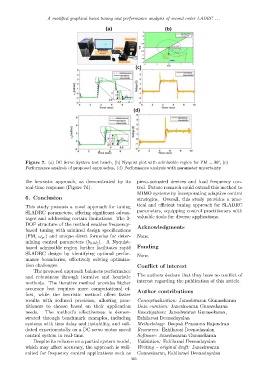
            Figure 7. (a) DC Servo System test bench, (b) Nyquist plot with admissible region for PM = 90°, (c)
            Performance analysis of proposed approaches, (d) Performance analysis with parameter uncertainty


            the heuristic approach, as demonstrated by its    piezo-actuated devices and load frequency con-
            real-time response (Figure 7d).                   trol. Future research could extend this method to
                                                              MIMO systems by incorporating adaptive control
            6. Conclusion                                     strategies. Overall, this study provides a prac-
                                                              tical and efficient tuning approach for SLADRC
            This study presents a novel approach for tuning
                                                              parameters, equipping control practitioners with
            SLADRC parameters, offering significant advan-
                                                              valuable tools for diverse applications.
            tages and addressing certain limitations. The 2-
            DOF structure of the method enables frequency-
                                                              Acknowledgments
            based tuning with minimal design specifications
            (PM, ω gc ) and unique direct formulas for deter-  None.
            mining control parameters (b 0 ,ω c ). A Nyquist-
            based admissible region further facilitates rapid  Funding
            SLADRC design by identifying optimal perfor-
                                                              None.
            mance boundaries, effectively solving optimiza-
            tion challenges.                                  Conflict of interest
                The proposed approach balances performance
            and robustness through iterative and heuristic    The authors declare that they have no conflict of
            methods. The iterative method provides higher     interest regarding the publication of this article.
            accuracy but requires more computational ef-      Author contributions
            fort, while the heuristic method offers faster
            results with reduced precision, allowing prac-    Conceptualization: Janeshwaran Gunasekaran
            titioners to choose based on their application    Data curation: Janeshwaran Gunasekaran
            needs.   The method’s effectiveness is demon-     Investigation: Janeshwaran Gunasekaran,
            strated through benchmark examples, including     Ezhilarasi Deenadayalan
            systems with time delay and instability, and vali-  Methodology: Deepak Prasanna Rajendran
            dated experimentally on a DC servo motor speed    Resources: Ezhilarasi Deenadayalan
            control system in real-time.                      Software: Janeshwaran Gunasekaran
                Despite its reliance on a partial system model,  Validation: Ezhilarasi Deenadayalan
            which may affect accuracy, the approach is well-  Writing – original draft: Janeshwaran
            suited for frequency control applications such as  Gunasekaran, Ezhilarasi Deenadayalan
                                                           365

