


Page 55 - JCTR-10-1
P. 55
Gonda et al. | Journal of Clinical and Translational Research 2024; 10(1): 33-51   51
        Supplementary Data 6

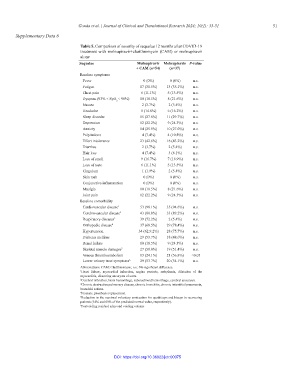
                                   Table 5. Comparison of severity of sequelae 12 months after COVID-19
                                   treatment with molnupiravir+clarithromycin (CAM)  or molnupiravir
                                   alone
                                  Sequelae                Molnupiravir  Molnupiravir  P‑value
                                                          + CAM (n=54)  (n=37)
                                  Baseline symptoms
                                    Fever                    0 (0%)     0 (0%)    n.s.
                                    Fatigue                 17 (31.5%)  13 (35.1%)  n.s.
                                    Chest pain              6 (11.1%)  5 (13.5%)  n.s.
                                    Dyspnea (93% < SpO < 96%)  10 (18.5%)  8 (21.6%)  n.s.
                                                  2
                                    Nausea                  2 (3.7%)   2 (5.4%)   n.s.
                                    Headache                8 (14.8%)  6 (16.2%)  n.s.
                                    Sleep disorder          15 (27.8%)  11 (29.7%)  n.s.
                                    Depression              12 (22.2%)  9 (24.3%)  n.s.
                                    Anxiety                 14 (25.9%)  10 (27.0%)  n.s.
                                    Palpitations            4 (7.4%)   4 (10.8%)  n.s.
                                    Effort intolerance      23 (42.6%)  16 (43.2%)  n.s.
                                    Diarrhea                2 (3.7%)   2 (5.4%)   n.s.
                                    Hair loss               4 (7.4%)   3 (8.1%)   n.s.
                                    Loss of smell           9 (16.7%)  7 (18.9%)  n.s.
                                    Loss of taste           6 (11.1%)  5 (13.5%)  n.s.
                                    Cingulum                1 (1.9%)   2 (5.4%)   n.s.
                                    Skin rash                0 (0%)     0 (0%)    n.s.
                                    Conjunctiva inflammation  0 (0%)    0 (0%)    n.s.
                                    Myalgia                 10 (18.5%)  8 (21.6%)  n.s.
                                    Joint pain              12 (22.2%)  9 (24.3%)  n.s.
                                  Baseline comorbidity
                                    Cardiovascular disease 1  53 (98.1%)  35 (94.6%)  n.s.
                                    Cerebrovascular disease 2  43 (80.0%)  33 (89.2%)  n.s.
                                    Respiratory diseases 3  39 (72.2%)  2 (5.4%)  n.s.
                                    Orthopedic disease 4    37 (68.5%)  29 (78.4%)  n.s.
                                    Hypertension           34 (62.9.2%)  28 (75.7%)  n.s.
                                    Diabetes mellitus       29 (53.7%)  18 (48.6%)  n.s.
                                    Renal failure           10 (18.5%)  9 (24.3%)  n.s.
                                    Skeletal muscle damages 5  27 (50.0%)  19 (51.4%)  n.s.
                                    Venous thromboembolism  13 (24.1%)  21 (56.8%)  <0.05
                                    Lower urinary tract symptoms 6  29 (53.7%)  20 (54.1%)  n.s.
                                   Abbreviations: CAM: Clarithromycin; n.s.: No significant difference.
                                   1 Heart  failure,  myocardial  infarction,  angina  pectoris,  arrhythmia,  dilatation  of  the
                                   myocarditis, dissecting aneurysm of aorta.
                                   2 Cerebral infarction, brain hemorrhage, subarachnoid hemorrhage, cerebral aneurysm.
                                   3 Chronic obstructive pulmonary disease, chronic bronchitis, chronic interstitial pneumonia,
                                   bronchial asthma.
                                   4 Fracture, prosthesis replacement.
                                   5 Reduction in the maximal voluntary contraction for quadriceps and biceps in recovering
                                   patients (54% and 69% of the predicted normal value, respectively).
                                   6 Postvoiding residual urine and voiding volume


                                                  DOI: https://doi.org/10.36922/jctr.00075

