


Page 129 - MI-2-3
P. 129
Microbes & Immunity                                                  Statistical modeling of COVID-19 trends


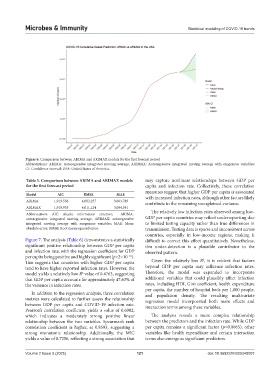
            Figure 6. Comparison between ARIMA and ARIMAX models for the first forecast period
            Abbreviations:  ARIMA:  Autoregressive  integrated  moving  average;  ARIMAX:  Autoregressive  integrated  moving  average  with  exogenous  variables;
            CI: Confidence interval; USA: United States of America.

            Table 5. Comparison between ARIMA and ARIMAX models   may capture nonlinear relationships between GDP per
            for the first forecast period                      capita and infection rate. Collectively, these correlation
                                                               measures suggest that higher GDP per capita is associated
            Model        AIC         RMSE          MAE
                                                               with increased infection rates, although other factors likely
            ARIMA       1,919.556   4,082,257    3,063,789     contribute to the remaining unexplained variance.
            ARIMAX      1,919.935   4,011,124    3,004,951
            Abbreviations: AIC: Akaike information criterion;  ARIMA:   The relatively low infection rates observed among low-
            autoregressive integrated moving average; ARIMAX: autoregressive   GDP per capita countries may reflect underreporting due
            integrated moving average with exogenous variables; MAE: Mean   to limited testing capacity rather than true differences in
            absolute error; RMSE: Root mean squared error.     transmission. Testing data is sparse and inconsistent across
                                                               countries, especially in low-income regions, making it
            Figure 7. The analysis (Table 6) demonstrates a statistically   difficult to correct this effect quantitatively. Nonetheless,
            significant positive relationship between GDP per capita   this under-detection is a plausible contributor to the
            and infection rate, with the regression coefficient for GDP   observed pattern.
            per capita being positive and highly significant (p<2×10 ).
                                                       −16
                                                                                       2
            This suggests that countries with higher GDP per capita   Given the relatively low  R , it is evident that factors
            tend to have higher reported infection rates. However, the   beyond GDP per capita may influence infection rates.
            model yields a relatively low R  value of 0.4763, suggesting   Therefore, the model was expanded to incorporate
                                    2
            that GDP per capita accounts for approximately 47.63% of   additional variables that could plausibly affect infection
            the variance in infection rates.                   rates, including HDI, Gini coefficient, health expenditure
                                                               per capita, the number of hospital beds per 1,000 people,
              In addition to the regression analysis, three correlation   and population density. The resulting multivariate
            metrics were calculated to further assess the relationship   regression model incorporated both main effects and
            between GDP per capita and COVID-19 infection rate.   interaction terms among these variables.
            Pearson’s correlation coefficient yields a value of 0.6902,
            which  indicates  a moderately  strong positive linear   The analysis reveals a more complex relationship
            relationship between the two variables. Spearman’s rank   between the predictors and the infection rate. While GDP
            correlation  coefficient  is  higher,  at  0.8593,  suggesting  a   per capita remains a significant factor (p=0.0065), other
            strong monotonic relationship. Additionally, the MIC   variables  like  health expenditure  and certain  interaction
            yields a value of 0.7256, reflecting a strong association that   terms also emerge as significant predictors.


            Volume 2 Issue 3 (2025)                        121                           doi: 10.36922/MI025040007

