


Page 78 - MSAM-3-3
P. 78
Materials Science in Additive Manufacturing                          Gradient porous material design criteria


                        A                                    B


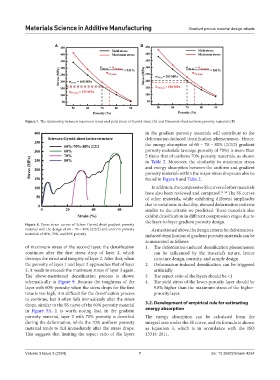
            Figure 7. The relationship between maximum stress and yield stress of Gyroid-sheet (A) and Diamond-sheet uniform porosity materials (B)
                                                               in the gradient porosity materials will contribute to the
                                                               deformation-induced densification phenomenon. Hence,
                                                               the energy absorption of 60 – 70 – 80% (2/2/2) gradient
                                                               porosity materials (average porosity of 70%) is more than
                                                               5 times that of uniform 70% porosity materials, as shown
                                                               in  Table 2. Moreover, the similarity in maximum stress
                                                               and energy absorption between the uniform and gradient
                                                               porosity materials within the major stress drops can also be
                                                               found in Figure 8 and Table 2.
                                                                 In addition, the compressive SS curves of other materials
                                                               have also been reviewed and compared. 31-34  The SS curves
                                                               of other materials, while exhibiting different amplitudes
                                                               due to variations in ductility, showed deformation patterns
                                                               similar to the criteria we predicted. These materials also
                                                               exhibit densification in different compression stages due to
                                                               the layer-to-layer gradient porosity design.
            Figure 8. Stress-strain curves of Schon-Gyroid-sheet gradient porosity
            material with the design of 60 – 70 – 80% (2/2/2) and uniform porosity   As mentioned above, the design criteria for deformation-
            materials of 60%, 70%, and 80% porosity            induced densification of gradient porosity materials can be
                                                               summarized as follows:
            of maximum stress of the second layer, the densification   1.  The deformation-induced densification phenomenon
            continues after the first stress drop of layer 2, which   can be influenced by the material’s nature, lattice
            destroys the structural integrity of layer 2. After that, when   structure design, porosity, and sample design
            the porosity of layer 1 and layer 2 approaches that of layer   2.  Deformation-induced densification can be triggered
            3, it needs to exceeds the maximum stress of layer 3 again.   artificially
            The above-mentioned densification process is shown   3.  The aspect ratio of the layers should be <1
            schematically in  Figure  9. Because the toughness of the   4.  The yield stress of the lower-porosity layer should be
            layer with 60% porosity when the stress drops for the first   9.8% higher than the maximum stress of the higher-
            time is too high, it is difficult for the densification process   porosity layer.
            to continue, but it often fails immediately after the stress
            drops, similar to the SS curve of the 60% porosity material   3.2. Development of empirical rule for estimating
            in  Figure  5A. It is worth noting that, in the gradient   energy absorption
            porosity material, layer 2 with 70% porosity is densified   The  energy  absorption  can  be  calculated  from  the
            during the deformation, while the 70% uniform porosity   integral area under the SS curve, and its formula is shown
            material tends to fail immediately after the stress drops.   as Equation 3, which is in accordance with the ISO
            This suggests that limiting the aspect ratio of the layers   13314: 2011.


            Volume 3 Issue 3 (2024)                         7                              doi: 10.36922/msam.4234

