


Page 29 - AIH-2-1
P. 29
Artificial Intelligence in Health                          COVID-19 diagnosis: FPA, k-NN, and SVM classifiers


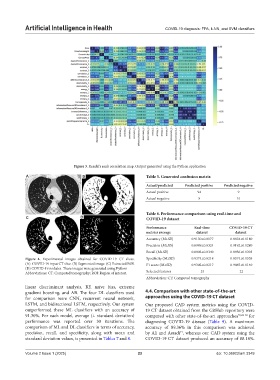
                                 Figure 3. Kendal’s rank correlation map. Output generated using the Python application
            A                       B                          Table 5. Generated confusion matrix
                                                               Actual/predicted  Predicted positive  Predicted negative
                                                               Actual positive       94               9
                                                               Actual negative       5                51


                                                               Table 6. Performance comparison using real‑time and
            C                      D                           COVID‑19 dataset

                                                               Performance          Real‑time      COVID‑19 CT
                                                               metrics average       dataset         dataset
                                                               Accuracy (M±SD)    0.9130±0.0177    0.8818±0.0180
                                                               Precision (M±SD)   0.8989±0.0324    0.9192±0.0280
                                                               Recall (M±SD)      0.8003±0.0340    0.8956±0.0305
            Figure  4.  Experimental images obtained for COVID-19 CT slices.   Specificity (M±SD)  0.9374±0.0218  0.8574±0.0538
            (A)  COVID-19 input CT slice. (B) Segmented image. (C) Extracted ROI.   F1 score (M±SD)  0.9302±0.0217  0.9065±0.0140
            (D) COVID-19 nodules. These images were generated using Python
            Abbreviations: CT: Computed tomography; ROI: Region of interest.  Selected features  24    22
                                                               Abbreviation: CT: Computed tomography
            linear discriminant analysis, RF, naïve bias, extreme
            gradient boosting, and AB. The four DL classifiers used   4.4. Comparison with other state-of-the-art
            for  comparison  were CNN,  recurrent neural network,   approaches using the COVID-19 CT dataset
            LSTM, and bidirectional LSTM, respectively. Our system   Our  proposed  CAD  system  metrics  using  the  COVID-
            outperformed these ML classifiers with an accuracy of   19 CT dataset obtained from the GitHub repository were
            91.30%. For each model, average (± standard deviation)   compared with other state-of-the-art approaches 55,69-72  for
            performance was reported over 30 iterations. The   diagnosing COVID-19 disease (Table  9). A  maximum
            comparison of ML and DL classifiers in terms of accuracy,   accuracy  of  89.36%  in  this  comparison  was  achieved
            precision, recall, and specificity, along with mean and   by Ali and Assadi , whereas our CAD system using the
                                                                              71
            standard deviation values, is presented in Tables 7 and 8.  COVID-19 CT dataset produced an accuracy of 88.18%.

            Volume 2 Issue 1 (2025)                         23                               doi: 10.36922/aih.3349

