


Page 156 - AJWEP-22-6
P. 156
Yadav, et al.


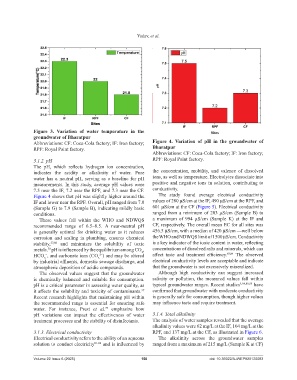
                Figure  3.  Variation  of water temperature  in the
                groundwater of Bharatpur
                Abbreviations: CF: Coca-Cola factory; IF: Iron factory;   Figure  4.  Variation of pH in the groundwater of
                RPF: Royal Paint factory.                           Bharatpur
                                                                    Abbreviations: CF: Coca-Cola factory; IF: Iron factory;
                3.1.2. pH                                           RPF: Royal Paint factory.
                The  pH,  which  reflects  hydrogen  ion  concentration,
                indicates  the  acidity  or alkalinity  of water. Pure   the concentration, mobility, and valence  of dissolved
                water has a neutral  pH, serving as a baseline  for pH   ions, as well as temperature. Electrolytes dissociate into
                measurements. In this study, average pH values were   positive and negative ions in solution, contributing to
                7.5 near the IF, 7.2 near the RPF, and 7.3 near the CF.   conductivity.
                Figure 4 shows that pH was slightly higher around the   The study found average electrical conductivity
                IF and lower near the RPF. Overall, pH ranged from 7.0   values of 280 µS/cm at the IF, 490 µS/cm at the RPF, and
                (Sample G) to 7.9 (Sample B), indicating mildly basic   601 µS/cm at the CF (Figure 5). Electrical conductivity
                conditions.                                         ranged from a minimum of 203 µS/cm (Sample B) to
                  These  values  fall  within  the  WHO and NDWQS   a maximum of 994  µS/cm (Sample K) at the IF and
                recommended  range of 6.5–8.5.  A  near-neutral  pH   CF, respectively. The overall mean EC for all sites was
                is generally  optimal  for drinking  water as it  reduces   456.5 µS/cm, with a median of 420 µS/cm —well below
                corrosion and scaling in plumbing, ensures chemical   the WHO and NDWQS limit of 1500 µS/cm. Conductivity
                stability, 57,80  and minimizes  the solubility of toxic   is a key indicator of the ionic content in water, reflecting
                metals.  pH is influenced by the equilibrium among CO ,   concentrations of dissolved salts and minerals, which can
                      78
                                                               2
                HCO , and carbonate ions (CO ) and may be altered   affect  taste  and  treatment  efficiency. 83,84  The  observed
                     −
                                             2−
                    3
                                            3
                by industrial effluents, domestic sewage discharge, and   electrical conductivity levels are acceptable and indicate
                atmospheric deposition of acidic compounds.         that the groundwater is not excessively mineralized.
                  The  observed values  suggest that  the  groundwater   Although high conductivity  can suggest increased
                is  chemically  balanced  and  suitable  for consumption.   salinity  or pollution,  the  measured values  fall  within
                pH is a critical parameter in assessing water quality, as   typical groundwater ranges. Recent studies 5,54,80,85  have
                it affects the solubility and toxicity of contaminants.    confirmed that groundwater with moderate conductivity
                                                               57
                Recent research highlights that maintaining pH within   is generally safe for consumption, though higher values
                the recommended range is essential for ensuring safe   may influence taste and require treatment.
                water. For instance, Prest  et al.  emphasize  how
                                               77
                pH  variations  can  impact  the  effectiveness  of  water   3.1.4. Total alkalinity
                treatment processes and the stability of disinfectants.  The analysis of water samples revealed that the average
                                                                    alkalinity values were 62 mg/L at the IF, 104 mg/L at the
                3.1.3. Electrical conductivity                      RPF, and 137 mg/L at the CF, as illustrated in Figure 6.
                Electrical conductivity refers to the ability of an aqueous   The alkalinity  across the groundwater samples
                solution to conduct electricity 81-84  and is influenced by   ranged from a maximum of 215 mg/L (Sample K at CF)


                Volume 22 Issue 6 (2025)                       150                           doi: 10.36922/AJWEP025120083

