


Page 158 - AJWEP-22-6
P. 158
Yadav, et al.
3.1.7. Free carbon dioxide
The average concentrations of free CO in groundwater
2
samples were 36 mg/L at IF, 49 mg/L at RPF, and
63 mg/L at CF, as illustrated in Figure 9. CF showed the
highest average free CO levels, followed by RPF, while
2
IF had the lowest. The concentration of free CO ranged
2
from a minimum of 28.6 mg/L at IF to a maximum of
89.1 mg/L at CF, with Sample B from IF having the
highest concentration and Sample K from CF the lowest.
The primary sources of free CO in water bodies are
2
respiration and decomposition by aquatic organisms.
CO reacts with water to partially form calcium
2
bicarbonate; in the absence of HCO , it can convert
−
3
into CO , releasing additional CO . High levels of free
2−
2
3
CO can contribute to the formation of carbonic acid,
2
affecting the pH and corrosiveness of water. Although
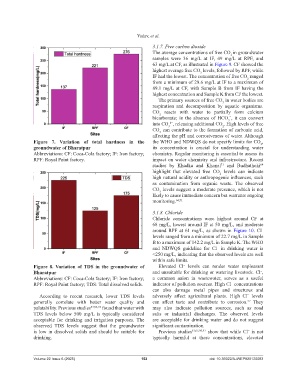
Figure 7. Variation of total hardness in the the WHO and NDWQS do not specify limits for CO ,
2
groundwater of Bharatpur its concentration is crucial for understanding water
Abbreviations: CF: Coca-Cola factory; IF: Iron factory; chemistry. Regular monitoring is essential to assess its
RPF: Royal Paint factory. impact on water chemistry and infrastructure. Recent
studies by Khadka and Khanal and Budhathoki
71
64
highlight that elevated free CO levels can indicate
2
high natural acidity or anthropogenic influences, such
as contamination from organic waste. The observed
CO levels suggest a moderate presence, which is not
2
likely to cause immediate concern but warrants ongoing
monitoring. 64,71
3.1.8. Chloride
Chloride concentrations were highest around CF at
68 mg/L, lowest around IF at 50 mg/L, and moderate
around RPF at 61 mg/L, as shown in Figure 10. Cl
−
levels ranged from a minimum of 22.7 mg/L in Sample
B to a maximum of 142.2 mg/L in Sample K. The WHO
and NDWQS guideline for Cl in drinking water is
−
<250 mg/L, indicating that the observed levels are well
within safe limits.
Figure 8. Variation of TDS in the groundwater of Elevated Cl levels can render water unpleasant
−
−
Bharatpur and unsuitable for drinking or watering livestock. Cl ,
Abbreviations: CF: Coca-Cola factory; IF: Iron factory; a common anion in wastewater, serves as a useful
−
RPF: Royal Paint factory; TDS: Total dissolved solids. indicator of pollution sources. High Cl concentrations
can also damage metal pipes and structures and
According to recent research, lower TDS levels adversely affect agricultural plants. High Cl levels
−
57
generally correlate with better water quality and can affect taste and contribute to corrosion. They
palatability. Previous studies 43,94,95 found that water with may also indicate pollution sources, such as road
TDS levels below 500 mg/L is typically considered salts or industrial discharges. The observed levels
acceptable for drinking and irrigation purposes. The are acceptable for drinking water and do not suggest
observed TDS levels suggest that the groundwater significant contamination.
is low in dissolved solids and should be suitable for Previous studies 61,67,96,97 show that while Cl is not
−
drinking. typically harmful at these concentrations, elevated
Volume 22 Issue 6 (2025) 152 doi: 10.36922/AJWEP025120083

