


Page 89 - DP-2-1
P. 89
Design+                                                               Analysis of 3D-printed anisotropic cells


            Table 3. Fabrication parameters of case study
            Infill type               Illustration of infill type     Process control factor      Control factors
            Raster (100% density)                                     Bead width (mm)                 0.4
                                                                      Line overlap (%)                 15
                                                                      Layer height (mm)               0.15


            Grid infill                                               Bead width (mm)                 0.4
                                                                      Air gap (mm)                     2
                                                                      Layer height (mm)               0.15


            Hexagonal infill                                          Bead width (mm)                 0.4
                                                                      Hexagon diameter (mm)            2
                                                                      Layer height (mm)               0.15


            A                      B


            C                      D


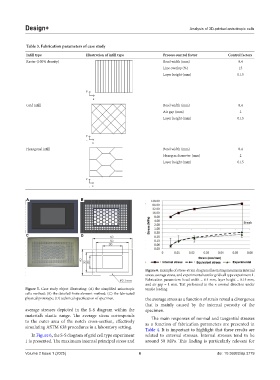
                                                               Figure 6. Example of stress-strain diagram illustrating maximum internal
                                                               stress, average stress, and experimental test for grid cell type experiment 1.
                                                               Fabrication parameters: bead width = 0.4 mm, layer height = 0.15 mm,
                                                               and air gap = 1 mm. Test performed in the × normal direction under
            Figure 5. Case study object illustrating: (A) the simplified anisotropic   tensile loading.
            cells method; (B) the detailed finite element method; (C) the fabricated
            physical prototype; (D) technical specification of specimen.  the average stress as a function of strain reveal a divergence
                                                               that is mainly caused by the internal porosity of the
            average  stresses  depicted  in the  S-S  diagram  within  the   specimen.
            material’s elastic range. The average stress corresponds   The main responses of normal and tangential stresses
            to the outer area of the notch cross-section, effectively   as a function of fabrication parameters are presented in
            simulating ASTM 638 procedures in a laboratory setting.
                                                               Table 4. It is important to highlight that these results are
              In Figure 6, the S-S diagram of grid cell type experiment   related to external stresses. Internal stresses tend to be
            1 is presented. The maximum internal principal stress and   around 50 MPa. This finding is particularly relevant for

            Volume 2 Issue 1 (2025)                         6                                doi: 10.36922/dp.3779

