


Page 249 - EJMO-9-2
P. 249
Eurasian Journal of
            Medicine and Oncology                                                   Prognosis of colon adenocarcinoma


            A                                                B


            C                                                D


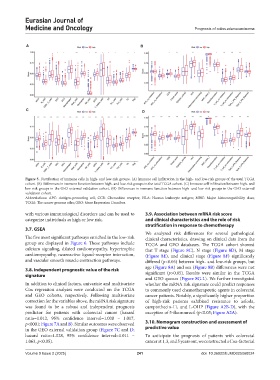
            Figure 5. Distribution of immune cells in high- and low-risk groups. (A) Immune cell infiltration in the high- and low-risk groups of the total TCGA
            cohort. (B) Differences in immune function between high- and low-risk groups in the total TCGA cohort. (C) Immune cell infiltration between high- and
            low-risk groups in the GEO external validation cohort. (D) Differences in immune function between high- and low-risk groups in the GEO external
            validation cohort.
            Abbreviations: APC: Antigen-presenting cell; CCR: Chemokine receptor; HLA: Human leukocyte antigen; MHC: Major histocompatibility class;
            TCGA: The cancer genome atlas; GEO: Gene Expression Omnibus.

            with various immunological disorders and can be used to   3.9. Association between mRNA risk score
            categorize individuals as high or low risk.        and clinical characteristics and the role of risk
                                                               stratification in response to chemotherapy
            3.7. GSEA
                                                               We analyzed risk differences for several pathological
            The five most significant pathways enriched in the low-risk   clinical characteristics, drawing on clinical data from the
            group are displayed in Figure 6. These pathways include   TCGA and GEO databases. The TCGA cohort showed
            calcium signaling, dilated cardiomyopathy, hypertrophic   that T stage (Figure  8C), N stage (Figure  8D), M stage
            cardiomyopathy, neuroactive ligand-receptor interaction,   (Figure  8E), and clinical stage (Figure  8F) significantly
            and vascular smooth muscle contraction pathways.   differed (p<0.05) between high- and low-risk groups, but
                                                               age (Figure 8A) and sex (Figure 8B) differences were not
            3.8. Independent prognostic value of the risk      significant (p>0.05). Results were similar in the TCGA
            signature
                                                               and GEO queues (Figure 8G-L). We further investigated
            In addition to clinical factors, univariate and multivariate   whether the mRNA risk signature could predict responses
            Cox regression analyses were conducted on the TCGA   to commonly used chemotherapeutic agents in colorectal
            and GEO cohorts, respectively. Following multivariate   cancer patients. Notably, a significantly higher proportion
            correction for the variables above, the mRNA risk signature   of  high-risk  patients  exhibited resistance  to xeloda,
            was found to be a robust and independent prognosis   camptothecin-11,  and  L-OHP  (Figure  A2B-D),  with the
            predictor for patients with colorectal cancer (hazard   exception of 5-fluorouracil (p<0.05; Figure A2A).
            ratio=1.012, 95% confidence interval=1.008 – 1.017,
            p<0001; Figure 7A and B). Similar outcomes were observed   3.10. Nomogram construction and assessment of
            in the GEO external validation group (Figure 7C and D;   predictive value
            hazard ratio=1.028, 95% confidence interval=1.011 –   To anticipate the prognosis of patients with colorectal
            1.063, p<0.05).                                    cancer at 1, 3, and 5 years out, we constructed a Cox-factorial

            Volume 9 Issue 2 (2025)                        241                         doi: 10.36922/EJMO025060024

