


Page 20 - IJB-4-1
P. 20
Progress in organ 3D bioprinting

           advantages and disadvantages in bioartificial organ   The advantages of inkjet-based bioprinting in organ
           manufacturing areas [9–11] . An obvious advantage of the   3D bioprinting contain the fast response speed, the high
           MNRP technology is that it can produce bioartificial organs  formation precision, and the high efficiency. These can be
           automatically  mimicking their natural counterparts using   analysed through two aspects. On the one hand, the acoustic
           heterogeneous cell types and other biomaterials. In this   3D bioprinters can be well-controlled through adjusting
           article, we highlight some of the three-dimensional (3D)  the jetting direction, droplet size, and cell viability. On the
           achievements of various bioprinting technologies in five   other hand, the thermal bioprinters can be well-controlled
           large organs, including the bone, liver, heart, cartilage and   through adjusting the printing speed and cost. One obvious
           skin, manufacturing.                                drawback of inkjet bioprinting in organ 3D bioprinting
           2.Different Types of Bioprinting                    is that the “bioinks” should be in liquid forms with low
                                                                       [13]
                                                               viscosities . This has greatly limited the height of the
           Given that working principles, five major types of 3D   constructs. Only low concentration of polymeric bioinks
                                                                                             6
           bioprinting technologies include inkjet-based bioprinting,   with a low cell density (fewer than 10  cells/mL) can avoid
           extrusion-based bioprinting, laser-assisted bioprinting,   nozzle clogging and reduce shear stress on cells [15–17] .
           stereolithography-based bioprinting and microvalve-based   Another obvious drawback of inkjet bioprinting in organ
           bioprinting [12–14] . Among these technologies extrusion-based   3D bioprinting is the poor mechanical properties of the 3D
           bioprinting technologies have been widely used to build   constructs. Till now, most of the researchers in this field
           cell-laden 3D tissues and organs.                   do their studies by modifying commercial inkjet printing
           2.1 Inkjet-based Bioprinting                        systems to print living cells. This has greatly limited their
                                                               development in soft and hardware as well as the complexity
                                                               of printed constructs. Due to these drawbacks, inkjet-based
                                                               bioprinting is still in its infancy stage for large organ 3D
                      (A)           (B)
                                                               bioprinting whereas extrusion-based bioprinting has been
                                                               prevalently used for numerous studies.
                                                               2.2 Extrusion-based Bioprinting


                                                                   (A)                (B)


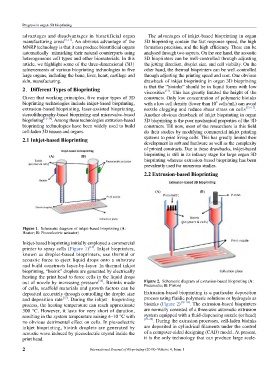
           Figure 1.  Schematic diagram of inkjet-based bioprinting (A:
           Heater; B: Piezoelectric actuator)

           Inkjet-based bioprinting initially employed a commercial
           printer to spray cells (Figure 1) [15] . Inkjet bioprinters,
           known as droplet-based bioprinters, use thermal or
           acoustic force to eject liquid drops onto a substrate
           and build constructs layer-by-layer. In thermal inkjet
           bioprinting, “bioink” droplets are generated by electrically
           heating the print head to force cells in the liquid drops
           out of nozzle by increasing pressure [16] . Bioinks made   Figure 2.  Schematic diagram of extrusion-based bioprinting (A:
                                                               Pneumatic; B: Piston)
           of cells, scaffold materials and growth factors can be
           deposited accurately through controlling the droplet size   Extrusion-based bioprinting is a particular deposition
           and deposition rate [17] . During the inkjet bioprinting   process using fluidic polymeric solutions or hydrogels as
                                                                              [18–24]
           process, the heating temperature can reach approximate   bioinks (Figure 2)  . The extrusion-based bioprinters
           300 °C. However, it lasts for very short of duration,   are normally consisted of a three-axis automatic extrusion
           resulting in the system temperature raising 4–10 °C with   system equipped with a fluid-dispensing nozzle (or head)
                                                               [25–28]
           no obvious detrimental effect on cells. In piezoelectric   . During the extrusion processes, cell-laden bioinks
           inkjet bioprinting, bioink droplets are generated by   are deposited in cylindrical filaments under the control
           acoustic wave induced by piezoelectric crystal inside the   of a computer-aided designing (CAD) model. At present,
           print head.                                         it is the only technology that can produce large scale-

           2                           International Journal of Bioprinting (2018)–Volume 4, Issue 1

