


Page 198 - IJB-9-2
P. 198
International Journal of Bioprinting              A regulated GelMA-MSCs scaffold by three-dimensional bioprinting


            Table 3. Histologic examination scores based on modified Wakitani grading system
             Group                        Cell       Matrix    Surface   Thickness   Integration of donor   Total
                                       morphology   staining  regularity  of cartilage  with host cartilage
            6 weeks
             Blank                       0.7±0.4    0.3±0.4    0.5±0.6    1.1±0.3        0.4±0.6       3.0±2.1
             GelMA-MSCs                  1.4±0.2    1.1±0.5    0.9±0.3    1.4±0.2        1.2±0.3       6.5±1.9
             GelMA-microRNA-410-MSCs     2.4±0.3    1.9±0.3    1.4±0.4    1.7±0.5        1.4±0.2       8.8±1.4
             P-value                                                                                    0.032
            12 weeks
             Blank                       1.3±0.2    0.9±0.6    1.1±0.2    1.1±0.5        1.3±0.4       5.7±1.8
             GelMA-MSCs                  1.6±0.4    1.2±0.3    1.1±0.5    1.8±0.5        1.6±0.6       7.3±2.1
             GelMA-microRNA-410-MSCs     2.9±0.3    2.2±0.4    2.5±0.5    1.9±0.3        1.7±0.3       11.2±1.9
             P-value                                                                                    0.004
            Data are presented as mean±standard deviation (sample size=18). The scores in the GelMA-microRNA-410-MSCs group were significantly higher than
            those in the other groups at weeks 6 and 12 (*, P<0.05)

             A


            B


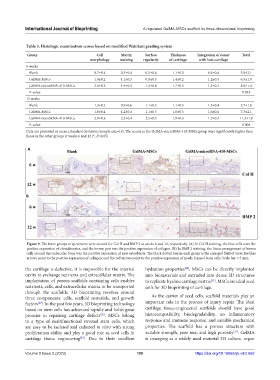
            Figure 9. The three groups of specimens were stained for Col II and BMP 2 at weeks 6 and 12, respectively. (A) In Col II staining, the blue cells were the
            positive expression of chondrocytes, and the brown part was the positive expression of collagen. (B) In BMP 2 staining, the linear arrangement of brown
            cells around the trabecular bone was the positive expression of new osteoblasts. The black dotted box in each group is the enlarged field of view, the blue
            arrows point to the positive expression of collagen, and the red arrows point to the positive expression of newly formed bone cells. Scale bar = 5 mm.

            the cartilage is defective, it is impossible for the internal   hydration properties , MSCs can be directly implanted
                                                                                [30]
            cavity to exchange nutrients and extracellular matrix. The   into biomaterials and extruded into dense 3D structures
            implantation of porous scaffolds containing cells enables   to replicate hyaline cartilage matrix . MSCs are ideal seed
                                                                                           [31]
            nutrients, cells, and extracellular matrix to be transported   cells for 3D bioprinting of cartilage.
            through the scaffolds. 3D bioprinting revolves around
            three components: cells, scaffold materials, and growth   As the carrier of seed cells, scaffold materials play an
            factors . In the past few years, 3D bioprinting technology   important role in the process of injury repair. The ideal
                 [27]
            based on stem cells has advanced rapidly and holds great   cartilage  tissue-engineered  scaffolds  should  have  good
                                            [28]
            promise in repairing cartilage defects . MSCs belong   histocompatibility, biodegradability, no inflammatory
            to a type of multifunctional stromal stem cells, which   response and immune response, and suitable mechanical
            are easy to be isolated and cultured in vitro with strong   properties. The scaffold has a porous structure with
            proliferation ability and play a good role as seed cells in   suitable strength, pore size, and high porosity . GelMA
                                                                                                    [32]
            cartilage tissue engineering . Due to their excellent   is emerging as a widely used material 3D culture, organ
                                   [29]
            Volume 9 Issue 2 (2023)                        190                      https://doi.org/10.18063/ijb.v9i2.662

