


Page 109 - IJOCTA-15-2
P. 109
A. Ebrahimzadeh, R. Khanduzi, A. Jajarmi / IJOCTA, Vol.15, No.2, pp.294-310 (2025)


                                                           Start


                                                    Initialize the control parameters of control
                                                       the FBMO and NLP


                                                     Generate the initial masses for e initia
                                                           FBMO


                                                       Compute the objective e the ob
                                                     functional of the initial swarm


                                                  Update the mass based on the FBMObased
                                                          procedure


                                                     Is there a new mass that has less
                                                     objective functional than previous
                                                            mass?
                                                                                   No

                                                       Yes

                                                    Change the location of previous masscation
                                                          and new mass


                                                     Is there a new mass that has less
                                                     objective functional than the best
                                                          mass  U (  best  ? )      No

                                                       Yes

                                                     Change the location of previous locati
                                                       mass and the best mass

                                              No
                                                     Is the stop condition satisfied?conditio

                                                                  Yes
                                                           D
                                                           Doneone


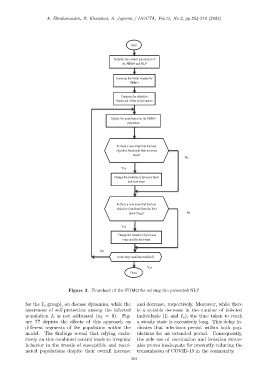
                               Figure 3. Flowchart of the FBMO for solving the presented NLP


            for the I v group), on disease dynamics, while the  and decrease, respectively. Moreover, while there
            awareness of self-protection among the infected   is a notable decrease in the number of infected
            population I c is not addressed (u 3 = 0). Fig-   individuals (I c and I v ), the time taken to reach
            ure ?? depicts the effects of this approach on    a steady state is excessively long. This delay in-
            different segments of the population within the   dicates that infections persist within both pop-
            model. The findings reveal that relying exclu-    ulations for an extended period. Consequently,
            sively on this combined control leads to irregular  the sole use of vaccination and isolation strate-
            behavior in the trends of susceptible and vacci-  gies proves inadequate for promptly reducing the
            nated populations despite their overall increase  transmission of COVID-19 in the community.
                                                           304

