


Page 93 - IJOCTA-15-4
P. 93
Advanced frequency control strategy for power systems with high renewable energy penetration


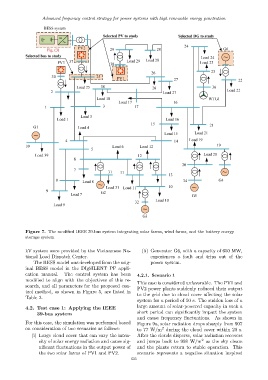
            Figure 7. The modified IEEE 39-bus system integrating solar farms, wind farms, and the battery energy
            storage system


            kV system were provided by the Vietnamese Na-       (ii) Generator G6, with a capacity of 650 MW,
            tional Load Dispatch Center.                            experiences a fault and trips out of the
                The BESS model was developed from the orig-         power system.
            inal BESS model in the DIgSILENT PF appli-
            cation manual.    The control system has been     4.2.1. Scenario 1
            modified to align with the objectives of this re-  This case is considered unfavorable. The PV1 and
            search, and all parameters for the proposed con-  PV2 power plants suddenly reduced their output
            trol method, as shown in Figure 5, are listed in  to the grid due to cloud cover affecting the solar
            Table 2.
                                                              system for a period of 50 s. The sudden loss of a
            4.2. Test case 1: Applying the IEEE               large amount of solar-powered capacity in such a
                 39-bus system                                short period can significantly impact the system
                                                              and cause frequency fluctuations. As shown in
            For this case, the simulation was performed based  Figure 9a, solar radiation drops sharply from 907
            on consideration of two scenarios as follows:     to 77 W/m during the cloud cover within 20 s.
                                                                         2
               (i) Large cloud cover that can vary the inten-  After the clouds disperse, solar radiation recovers
                                                                                           2
                  sity of solar energy radiation and cause sig-  and jumps back to 998 W/m as the sky clears
                  nificant fluctuations in the output power of  and the plants return to stable operation. This
                  the two solar farms of PV1 and PV2.         scenario represents a negative situation inspired
                                                           635

