


Page 203 - AJWEP-22-4
P. 203
Bombax ceiba-based carbons for dye removal

                                                                    Bc-Na  exhibited  sharper  C=C  bands  and  fewer  polar
                                                                    groups, consistent  with  higher  thermal  degradation
                                                                    and deoxygenation during alkaline activation.  These
                                                                                                              14
                                                                    surface functionalities are crucial for dye adsorption. In
                                                                    particular, hydroxyl, carbonyl, phosphate, and aromatic
                                                                    groups are expected to facilitate electrostatic attraction,
                                                                    hydrogen bonding, and π–π stacking interactions with
                                                                    Rh  B  molecules,  enhancing  adsorption  capacity  and
                                                                    rate.

                                                                    3.2.6. Physicochemical properties in the adsorption of
                                                                    cationic dye
                                                                    The adsorption performance of the AC samples toward
                                                                    RhB  is  strongly  influenced  by  their  physicochemical
                                                                    characteristics,  as  revealed  by  XRD,  Raman
                                                                    spectroscopy, SEM, BET, and FTIR analyses.
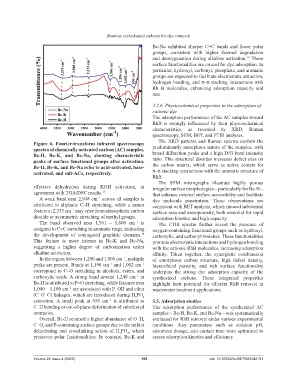
                Figure  6. Fourier-transform infrared spectroscopy     The XRD patterns and Raman spectra confirm the
                spectra of chemically activated carbon (AC) samples.   predominantly amorphous nature of the samples, with
                Bc-H,  Bc-K,  and Bc-Na,  showing characteristic    broad diffraction peaks and a high D/G band intensity
                peaks of surface functional groups after activation.   ratio. This structural disorder increases defect sites on
                Bc-H, Bc-K, and Bc-Na refer to acid-activated, base-  the  carbon  matrix,  which  serve  as active  centers  for
                activated, and salt-ACs, respectively.              π–π stacking interactions with the aromatic structure of
                                                                    RhB.
                                                                       The  SEM micrographs illustrate  highly  porous
                effective  dehydration  during  KOH  activation,  in   irregular surface morphologies – particularly for Bc-H –
                agreement with TGA/DSC results. 13                  that enhance external surface accessibility and facilitate
                  A weak band near 2,948 cm  across all samples is   dye molecule penetration.  These  observations  are
                                            −1
                attributed  to aliphatic  C–H stretching,  while a minor   consistent with BET analysis, which showed substantial
                feature at 2,333 cm  may arise from atmospheric carbon   surface area and mesoporosity, both essential for rapid
                                −1
                dioxide or asymmetric stretching of methyl groups.  adsorption kinetics and high capacity.
                  The band observed near 1,561 – 1,600 cm  is          The  FTIR  spectra  further  reveal  the  presence  of
                                                            −1
                assigned to C=C stretching in aromatic rings, indicating   oxygen-containing functional groups such as hydroxyl,
                the  development  of conjugated  graphitic  domains.    carboxylic, and carbonyl moieties. These functionalities
                                                               18
                This feature  is more intense in Bc-K and Bc-Na,    promote electrostatic interactions and hydrogen bonding
                suggesting a higher degree  of carbonization  under   with the cationic RhB molecules, increasing adsorption
                alkaline activation.                                affinity.  Taken  together,  the  synergistic  combination
                  In the region between 1,200 and 1,000 cm , multiple   of amorphous carbon  structure,  high defect  density,
                                                       −1
                peaks are present. Bands at 1,196 cm  and 1,002 cm    hierarchical  porosity, and rich  surface functionality
                                                               −1
                                                 −1
                correspond to C–O stretching in alcohols, esters, and   underpins the strong dye adsorption capacity  of the
                carboxylic acids. A strong band around 1,240 cm  in   synthesized  carbons.  These  integrated  properties
                                                             −1
                Bc-H is attributed to P=O stretching, while features near   highlight  their  potential  for  efficient  RhB  removal  in
                1,040 – 1,100 cm  are associated with P–OH and ether   wastewater treatment applications.
                               −1
                (C–O–C) linkages, which are introduced during H PO
                                                            3
                                                                4
                activation. A  small peak at 656 cm  is attributed  to   3.3. Adsorption studies
                                                 −1
                C–H bending or out-of-plane deformation of substituted   The adsorption performance  of the synthesized  AC
                aromatics.                                          samples – Bc-H, Bc-K, and Bc-Na – was systematically
                  Overall, Bc-H retained a higher abundance of O–H,   evaluated for RhB removal under various experimental
                C–O, and P-containing surface groups due to the milder   conditions.  Key  parameters  such as  solution  pH,
                dehydrating  and crosslinking action  of H PO , which   adsorbent dosage, and contact time were optimized to
                                                      3
                                                         4
                preserves  polar  functionalities.  In  contrast,  Bc-K  and   assess adsorption kinetics and efficiency.


                Volume 22 Issue 4 (2025)                       195                           doi: 10.36922/AJWEP025240191

